If you’ve spent any time researching floating docks — platforms that rest on top of the water and rise and fall with it, rather than sitting on fixed posts sunk into the lakebed — you’ve probably noticed the market splits pretty cleanly into two categories: custom-fabricated systems built and installed by a contractor, and modular floating dock systems you can configure yourself. This article is about the second kind. Modular floating docks are made from interlocking plastic or foam-filled polyethylene sections (called “floats” or “dock modules”) that snap or bolt together to form a walkway, boat slip, or full dock platform. They’re popular with lake-house owners because you can expand them section by section, remove them for winter without a crane, and avoid the permitting complexity that comes with permanent structures. The three brands this guide covers — Patriot, Eagle Float, and PlayStar — are among the most widely specified mid-to-premium modular systems in North America. By the end of this article, you’ll know which one makes sense for your load requirements, your climate, and your budget.
| EDITOR'S PICK[PlayStar Aluminum Floating Dock](https://www.amazon.com/dp/B00AP7KK44?tag=greenflower20-20)… | Mid-tier[Patriot Docks Low-Profile Float](https://www.amazon.com/dp/B0BB8BY7KC?tag=greenflower20-20)… | Budget pick[Eagle Float Dock Floats](https://www.amazon.com/dp/B0D367NR7Y?tag=greenflower20-20) | |
|---|---|---|---|
| Material | Aluminum / Resin | Aluminum | HDPE / EPS Foam |
| Dimensions | 4'x10' | — | 2'x3'x8" |
| UV Resistant | — | — | ✓ |
| Warranty | — | — | 15-Year |
| Price | $1,779.21 | $1,450.56 | $139.98 |
| See on Amazon → | See on Amazon → | See on Amazon → |
How These Three Systems Are Actually Built
Before comparing numbers, it helps to understand the construction philosophy behind each brand, because that philosophy flows directly into where each system performs well and where it struggles.
Patriot Dock: Rotomolded Single-Piece Shell
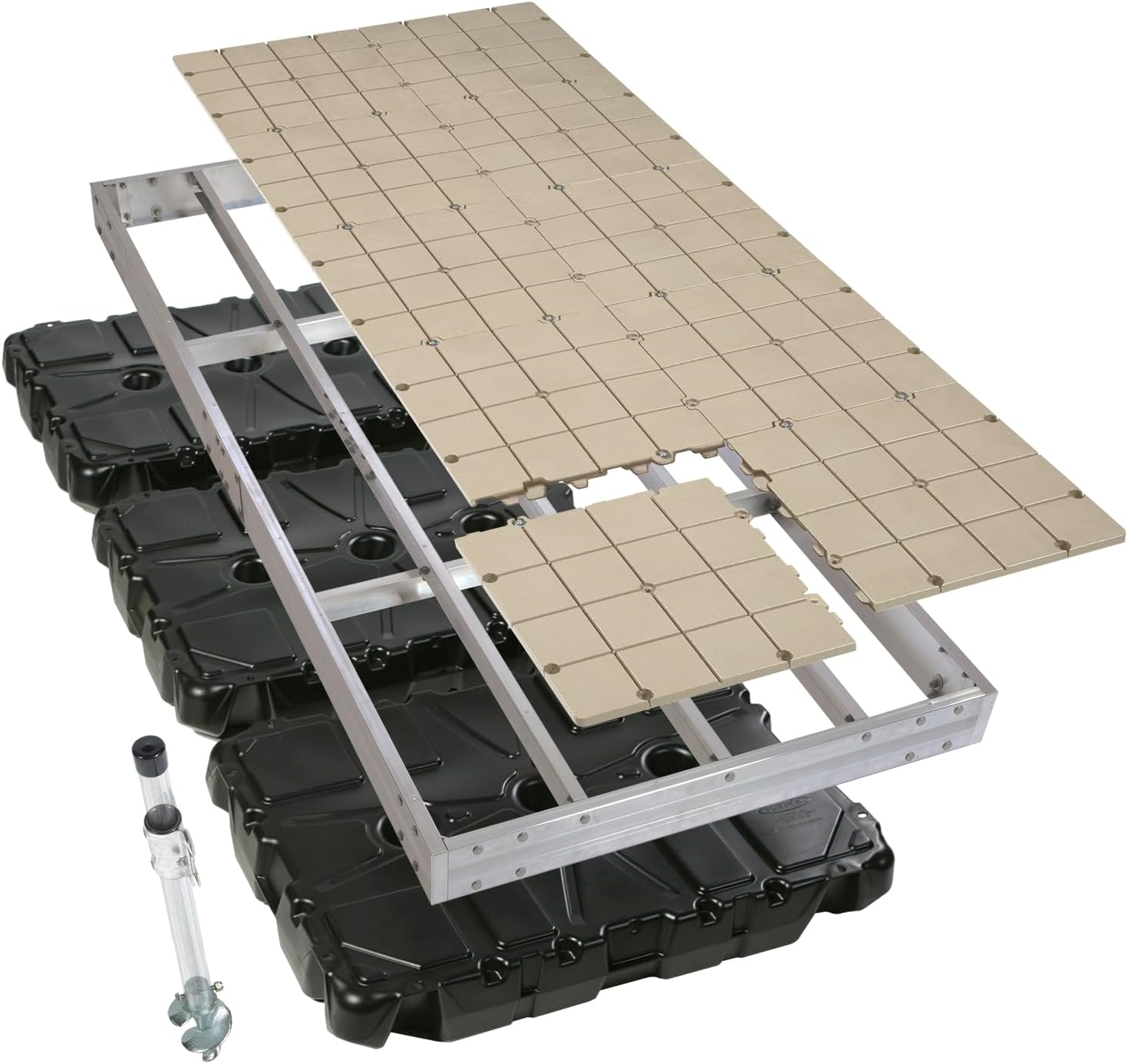
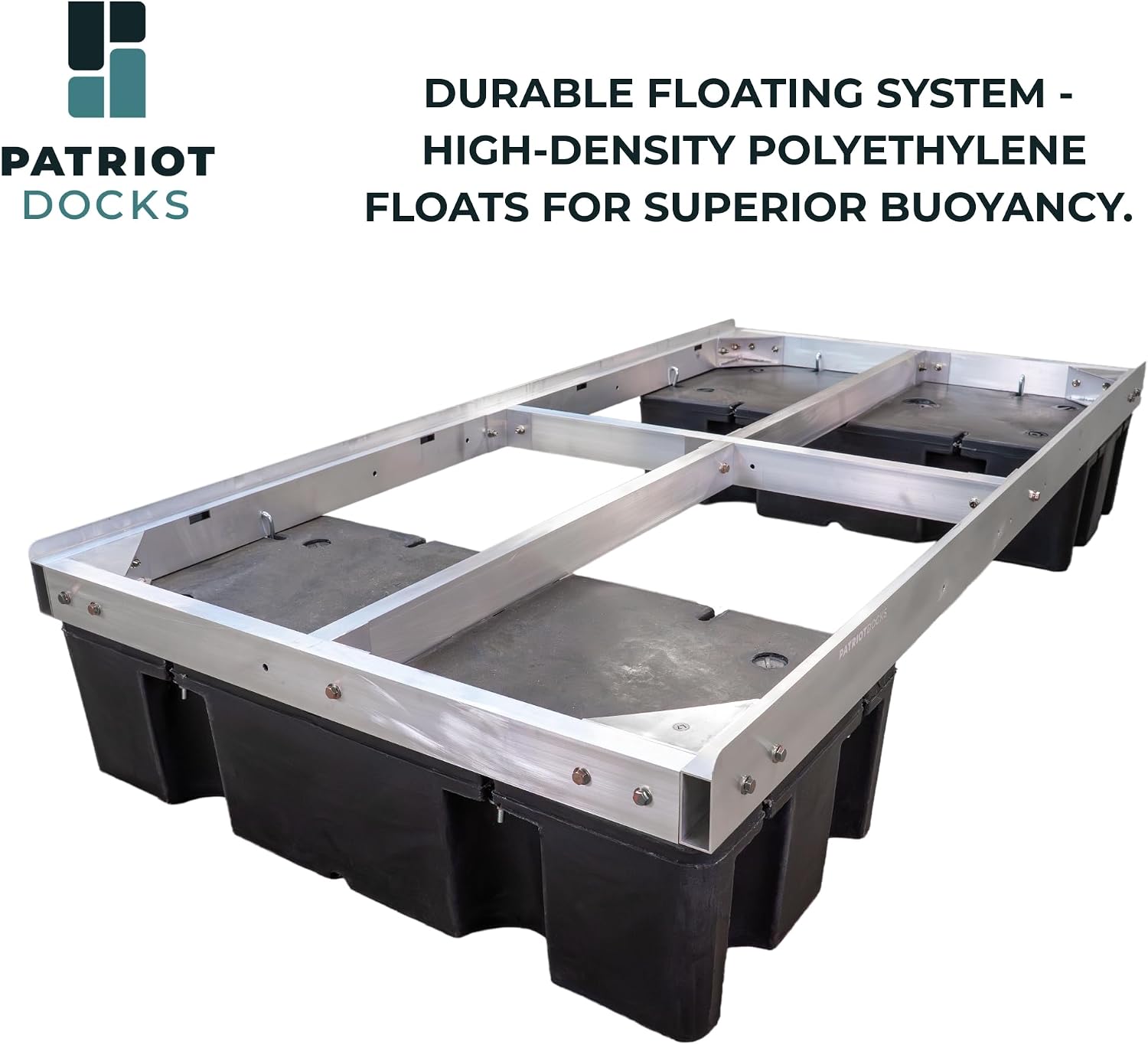
Patriot Dock builds its modules from rotationally molded high-density polyethylene (HDPE) — a one-piece shell with no seams at the waterline, filled with expanded polystyrene (EPS) foam. Per Patriot Docks LLC standard float product specification sheets, their 4×8-foot float is rated for 1,200 lbs of distributed load, with a freeboard (the height of the deck above the waterline when loaded) that holds at approximately four inches under typical residential use. The one-piece rotomolded shell is a meaningful engineering choice: seams are the primary failure point in freeze-thaw cycling, and eliminating them reduces the risk of water infiltrating the foam core over time. Patriot publishes a 15-year limited warranty on their float modules, which is the longest coverage window among the three brands reviewed here.
PlayStar
$1,779.21
In stock on Amazon
Check price on AmazonEagle Float: Multi-Chamber Buoyancy Design
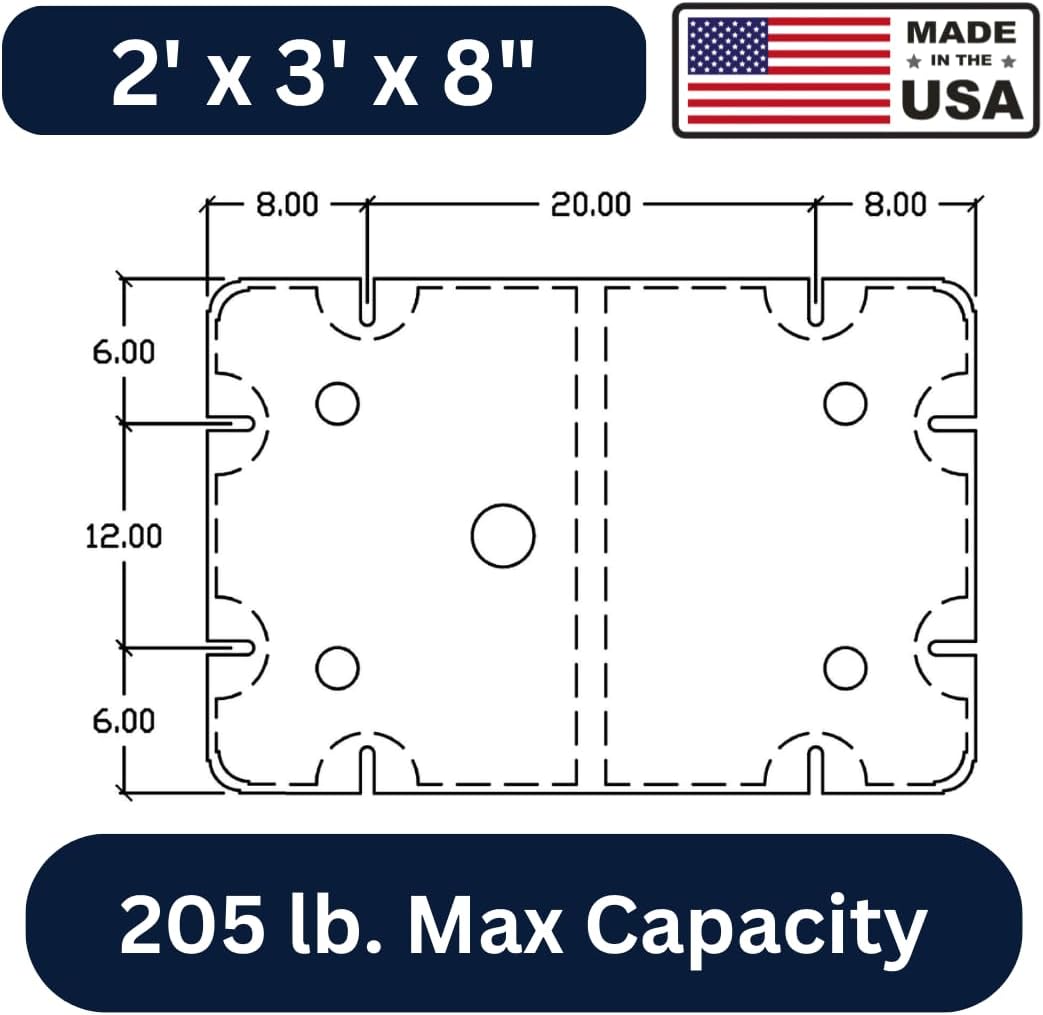
Eagle Float uses a similar rotationally molded HDPE construction but takes a different approach to buoyancy management. Eagle Float modules — standard dimensions run 4×8 and 5×10 feet — incorporate a multi-chamber internal structure in the foam fill, which Eagle Float Inc. product line technical documentation states is designed to maintain partial buoyancy even if the outer shell is compromised. Their published load rating for the 4×8 module is 1,280 lbs. Eagle Float has historically concentrated its dealer network in the Great Lakes region, and the brand’s distribution skews toward markets where sustained freeze-thaw exposure is a planning assumption rather than an edge case. The company backs its floats with a 10-year limited warranty.
Patriot
$1,450.56
In stock on Amazon
Check price on AmazonPlayStar: Injection-Molded Frame with EPS Billet
PlayStar approaches the market from a different construction angle. Their system is built around injection-molded polypropylene frames with separate EPS foam billets nested inside — a two-part design that is more cost-efficient to manufacture but creates a frame-to-foam interface worth evaluating carefully in cold-climate applications. Per PlayStar Inc. dock systems owner manuals and specification guides, their 4×8 floats are rated at 960 lbs of distributed load, which is meaningfully lower than either Patriot or Eagle Float at the same footprint. PlayStar’s 5-year float warranty reflects the different durability profile of the two-part construction relative to rotomolded alternatives. Where PlayStar makes up ground is in configurability and price: their connector system accommodates a wide range of angles and first-party add-on accessories, and their price-per-square-foot on entry-level kits runs 15–25% below comparable Patriot configurations based on retail pricing at major marine dealers in spring 2026.
Eagle
$139.98
In stock on Amazon
Check price on AmazonCapacity and Load Ratings Compared
This is the decision-relevant comparison most buyers need up front. The numbers below are drawn from published manufacturer specification sheets and owner manuals from Patriot Docks LLC, Eagle Float Inc., and PlayStar Inc.
Patriot: Built for Heavy-Use Configurations
At 1,200 lbs per 4×8-foot module, Patriot is engineered for configurations that will see regular pontoon tie-up, PWC loading, and simultaneous foot traffic from multiple adults. The approximately four-inch freeboard under load keeps the deck surface at a comfortable working height above the waterline throughout the load range. Contractors who build large residential docks — multi-slip layouts, full dock-and-gangway systems — frequently specify Patriot when the load math involves stacking boat weight, equipment weight, and occupant weight across a footprint of 200 square feet or more.
PlayStar
$1,779.21
In stock on Amazon
Check price on AmazonEagle Float: Highest Rated Capacity in Class
Eagle Float edges out Patriot on published load capacity at 1,280 lbs per 4×8 module, and the approximately 4.5-inch freeboard under load provides slightly more deck height above the waterline than either of the other two systems. Boating Magazine’s dock system buyer coverage (boatingmag.com) has recognized Eagle Float’s capacity ratings and cold-climate reputation within Great Lakes dealer networks as a benchmark for the category. For buyers who are simultaneously managing maximum load requirements and cold-climate durability concerns, Eagle Float holds both variables without compromise.
Patriot
$1,450.56
In stock on Amazon
Check price on AmazonPlayStar: Right-Sized for Light-to-Medium Use
PlayStar’s 960-lb rating per 4×8 module works well in the applications the system is genuinely designed for: swim platforms, guest docks, light-use PWC ports, and protected-cove residential docks with moderate foot traffic. The capacity difference — roughly 25–33% less per module than Patriot or Eagle Float — compounds quickly across a larger footprint, so buyers planning heavy-use multi-slip configurations should factor that math early. In aggregated owner feedback across marine retailer review platforms, PlayStar earns consistently strong ratings for swim platforms and light residential use; the feedback pattern shifts when sustained pontoon and heavy PWC loading enters the picture.
Eagle
$139.98
In stock on Amazon
Check price on AmazonFreeze-Thaw Durability: The Most Important Variable in Cold Climates
For buyers in USDA Plant Hardiness Zones 3–6 — roughly the Great Lakes, upper Midwest, Minnesota lake country, and northern New England — freeze-thaw performance isn’t a marketing checkbox. It is the single most consequential durability variable in a floating dock purchase.
The core mechanism: water expands approximately 9% when it freezes. If water has infiltrated a dock module’s foam core through a crack, a pinhole, or a seam joint, that expansion creates internal pressure that enlarges the void on the next thaw cycle. After enough cycles, structural delamination or visible foam degradation follows — either of which reduces buoyancy and eventually means module replacement. This Old House’s seasonal dock maintenance guidance (thisoldhouse.com) notes that foam-core dock modules should be inspected annually for waterline cracks and surface crazing precisely because this failure mode is cumulative and slow to present visually.
Patriot: 15-Year Track Record in Northern Freshwater
Patriot holds a strong position on freeze-thaw durability specifically because the rotomolded single-piece shell minimizes water infiltration entry points. Owner reports in regional lake association communities consistently describe Patriot modules lasting 15–20 years in northern freshwater environments without foam degradation — a performance window that aligns with the brand’s 15-year limited warranty on floats. The limiting factor in aged Patriot builds is typically UV degradation of the HDPE skin surface rather than structural foam failure, which is a meaningful distinction: skin weathering is cosmetic and slow-moving; foam failure is structural and accelerating.
PlayStar
$1,779.21
In stock on Amazon
Check price on AmazonEagle Float: Best Protection Against Shell-Compromise Scenarios
Eagle Float is competitive with Patriot on freeze-thaw performance, and arguably leads on the specific risk scenario of shell compromise. The multi-chamber foam structure means that localized shell damage — a scrape against a submerged rock, a sharp edge from winter ice movement — does not translate directly into full-module buoyancy loss the way it can in a single-chamber design. Boating Magazine’s dock system buyer coverage (boatingmag.com) notes Eagle Float’s standing in Great Lakes dealer networks as a reference point for cold-climate performance reliability. Dealer longevity reports from northern Michigan and Wisconsin lake markets suggest real-world performance that extends beyond the 10-year warranty window in most residential applications.
Patriot
$1,450.56
In stock on Amazon
Check price on AmazonPlayStar: Manageable Risk with Disciplined Winterization
PlayStar is the most vulnerable of the three to sustained freeze-thaw cycling, and this is worth stating plainly. The injection-molded polypropylene frame surrounding the EPS foam billet creates a frame-to-foam interface — a stress concentration point — that provides a potential pathway for water infiltration under freeze-thaw stress that the one-piece rotomolded designs avoid structurally. PlayStar’s 5-year float warranty reflects this performance profile. In markets where the dock comes out of the water each October and returns in May, the risk is manageable and many PlayStar owners report fully adequate service life. In markets where modules are left through hard freeze events — whether by choice or because removal logistics are difficult — the performance gap relative to Patriot and Eagle Float becomes consequential over a 5-to-10-year horizon.
Eagle
$139.98
In stock on Amazon
Check price on AmazonConnector Systems and Expandability
All three brands use proprietary connector systems, which means that once you’ve committed to a brand, you’re in that ecosystem for future expansions. This matters more than buyers typically realize at the time of the initial purchase decision.
Patriot: Stainless-Steel Bolt-Through
Patriot’s connector uses a stainless-steel bolt-through design that owners consistently describe as secure and resistant to movement under wave action and boat wash. The tradeoff is installation time — Patriot builds typically require more hardware and more hands than competing systems. The modularity is real but not effortless.
PlayStar
$1,779.21
In stock on Amazon
Check price on AmazonEagle Float: Tool-Free Tab-and-Cam
Eagle Float’s locking system uses a tab-and-cam connector that allows modules to be joined and separated without tools, which speeds up seasonal installation and removal meaningfully. The no-tool connection is the most commonly cited reason contractors and dock installers specify Eagle Float for clients who will handle annual removal themselves. Per Eagle Float Inc. product line technical documentation, the connector is rated for equivalent tensile loads to bolt-through systems, though owners in high-wake environments occasionally note more flex between modules than with bolted designs.
Patriot
$1,450.56
In stock on Amazon
Check price on AmazonPlayStar: Broadest Accessory Ecosystem
PlayStar’s connector ecosystem has expanded substantially and now includes the widest range of first-party accessories — gangway hinges, anchor post brackets, swim platform attachments, and dock lighting mounts — of the three brands. If you are building a multi-function dock environment that incorporates swim ladders, PWC ports, and accessory rails and want them all from one supplier, PlayStar’s catalog breadth is a genuine advantage.
Eagle
$139.98
In stock on Amazon
Check price on AmazonPrice Context for 2026 Builds
Based on retail pricing at major marine dealers and waterfront specialty retailers in spring 2026:
- A Patriot 8×24-foot floating dock starter kit (three 4×8 floats, frame connectors, anchor hardware) retails in the $3,200–$4,100 range depending on region and dealer.
- A comparable Eagle Float configuration runs $3,400–$4,400.
- An equivalent PlayStar kit typically lands $2,600–$3,200.
The PlayStar price advantage is real and should not be dismissed. In the right application — a swim platform for a southern-tier lake house with mild winters, a guest dock on a protected cove with light PWC traffic — the 20–25% cost delta represents meaningful savings that can be redirected to dock accessories, lighting, or a better PWC port. Where the math shifts: if you are in Zone 4 or colder and your dock faces meaningful year-round freeze-thaw exposure, the module replacement costs that can accumulate over a 10-year window with PlayStar may close or eliminate the initial price gap relative to Patriot or Eagle Float.
The Decision Rule
If your location freezes hard and modules stay in the water through winter, or removal is logistically difficult: Eagle Float is the operational recommendation. The multi-chamber foam structure provides the best protection against the failure mode that kills dock modules in cold climates, and the tool-free connector simplifies removal logistics — which helps you actually winterize correctly. Patriot is a close second with a longer published warranty.
If you are in a temperate or mild-freeze climate and you reliably remove the dock for winter: Patriot or PlayStar both perform well over the long term. PlayStar’s lower entry cost and broader accessory ecosystem make it a strong value pick for light-to-medium-use residential builds. Patriot earns its price premium if you are building a large, heavy-use configuration where per-module load ratings compound across the full footprint.
If you are a contractor specifying for clients who will handle annual removal themselves: Eagle Float’s no-tool connector system reduces service calls in April when clients reassemble after winter storage. That operational detail matters more than the spec sheet in the field.
All three brands ship through established marine dealer networks and maintain active contractor support programs. The right choice depends less on brand prestige than on matching construction method to climate exposure — and being honest about which winterization scenario will actually be executed each fall.