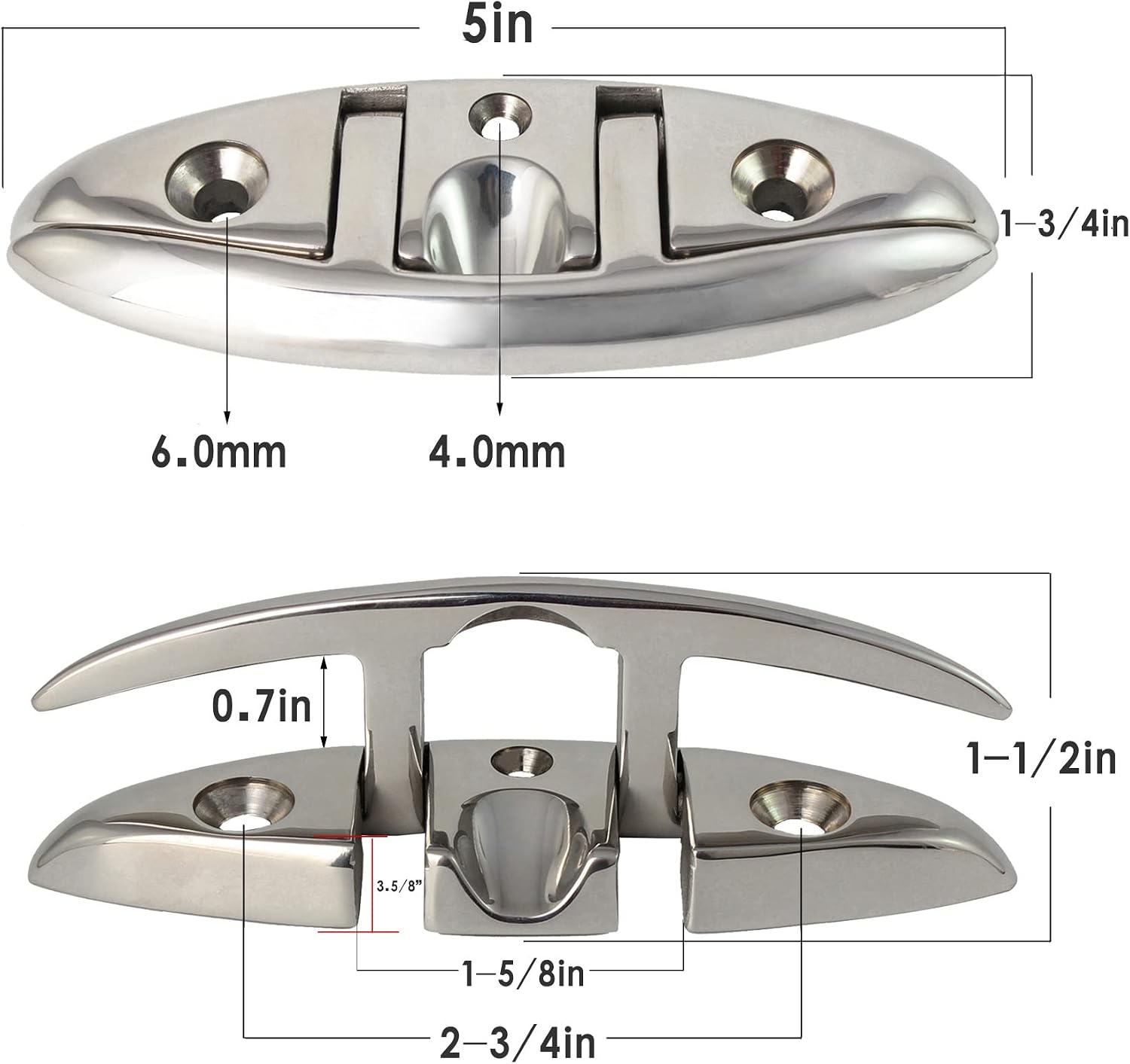
A dock cleat is the fitting — usually a T- or horn-shaped piece of hardware — that you wrap a line around to hold a boat in place. If you’ve ever tied a figure-eight hitch around one to keep a runabout from drifting away overnight, you’ve used a cleat. Simple concept, but the hardware world has split into two meaningfully different styles: fixed cleats, which always stand proud of the dock surface, and folding cleats, which lay flat until you flip them up. That single difference in geometry cascades into real tradeoffs around safety, holding strength, aesthetics, and installation requirements. Choosing the wrong one for your situation is an easy mistake that costs you money twice — once at purchase and once at replacement. This article breaks down exactly how to make that call, including the material question (316 stainless versus galvanized versus cast aluminum) that determines whether your hardware still looks good in five years.
| EDITOR'S PICK[MarineNow Premium Cast Aluminum](https://www.amazon.com/dp/B089W492YP?tag=greenflower20-20)… | Mid-tier[ZOMCHAIN Boat Cleat Open Base B](https://www.amazon.com/dp/B0CT2LDNB6?tag=greenflower20-20)… | Budget pick[Seachoice Open Base Dock Cleat](https://www.amazon.com/dp/B001GOXX0S?tag=greenflower20-20) | |
|---|---|---|---|
| Material | Cast Aluminum | 316 Stainless Steel | Galvanized Gray Iron |
| Style | S-Style | Open Base | Open Base |
| Available Sizes | 10"/12"/15" | 4"/5"/6"/8" | 8" |
| Fasteners Included | — | ✓ | — |
| Corrosion Resistant | ✓ | — | — |
| Pack Sizes | 1/2/4/6/10/50 | — | — |
| Price | $153.00 | $18.79 | $13.33 |
| See on Amazon → | See on Amazon → | See on Amazon → |
The Core Tradeoff: Fixed Strength vs. Folding Safety
Here’s the honest framing: fixed cleats are stronger and simpler; folding cleats are safer to walk around and cleaner-looking when not in use. Neither is universally better. Which matters more depends almost entirely on how your dock gets used.
Fixed cleats — the traditional horn cleats found on virtually every production dock, marina finger pier, and commercial slip — stay upright at all times. That’s their strength and their liability. On a dock where children run barefoot, where guests unfamiliar with marine environments are navigating in flip-flops after dark, or where a tight gangway separates a lift from the dock edge, a protruding cleat is a genuine tripping hazard. Owner feedback on folding-cleat products converges on nearly identical language — phrases like “eliminates stubbed toes” appear repeatedly. That’s not marketing copy; it’s the reason people actually buy them.
Folding cleats solve the walkability problem elegantly. When the boat isn’t in the slip, the cleat folds flush with the deck surface. When you need it, one motion brings it upright. The tradeoff is mechanical complexity: more moving parts means more potential failure points, and the pivot hardware on folding designs tends to be the weakest link in the system. Buyers consistently note that smaller-diameter center bolts on some folding designs can fail under installation stress — a strong signal that included hardware on many folding products is built to minimum spec, not generous safety margins.
The decision frame: If your dock sees regular barefoot traffic, has children on it, or you’ve designed the aesthetic around a flush, clean deck look, folding cleats earn their price premium. If your dock is primarily a working tie-up point with limited foot traffic across the cleat field — or you’re specifying a commercial slip or a dock for serious cruising loads — fixed cleats are the more defensible choice on pure holding-strength grounds.
Material Grade: How to Choose the Right Metal
This is where the decision gets technical, and where intermediate buyers make the most expensive mistakes. Each material has a legitimate use case and a context where it disappoints. The three sections below address the three realistic purchase tiers for dock cleats sold to recreational boaters.
316 Stainless Steel — The Saltwater Standard
316 stainless steel is the marine-grade benchmark. The difference from 304 stainless — the grade used in kitchen appliances — is the addition of molybdenum, which substantially improves resistance to chloride corrosion, the kind saltwater causes. Power & Motoryacht (Sky & Telescope Media), in its editorial coverage of marine-grade metals, identifies 316 as the correct specification for any cleat in a saltwater or brackish environment, and the price premium over lesser grades is justified in those conditions. Owner feedback on 316 stainless fixed-horn cleats is consistently strong on finish quality, and a notable pattern emerges: experienced buyers immediately upgrade to stainless through-bolts with fender washers rather than using the supplied mounting screws. If the manufacturer ships zinc or ungraded fasteners with a 316 cleat, those fasteners are the weak link — they will show rust before the cleat does.
In freshwater environments, 316 stainless still wins on long-term aesthetics. Practical Sailor (Belvoir Publications), in its cleat-strength and mounting-hardware review, notes that 316 holds a polished appearance for a decade or more with minimal maintenance, making it the correct specification whenever dock finish matters as much as function.
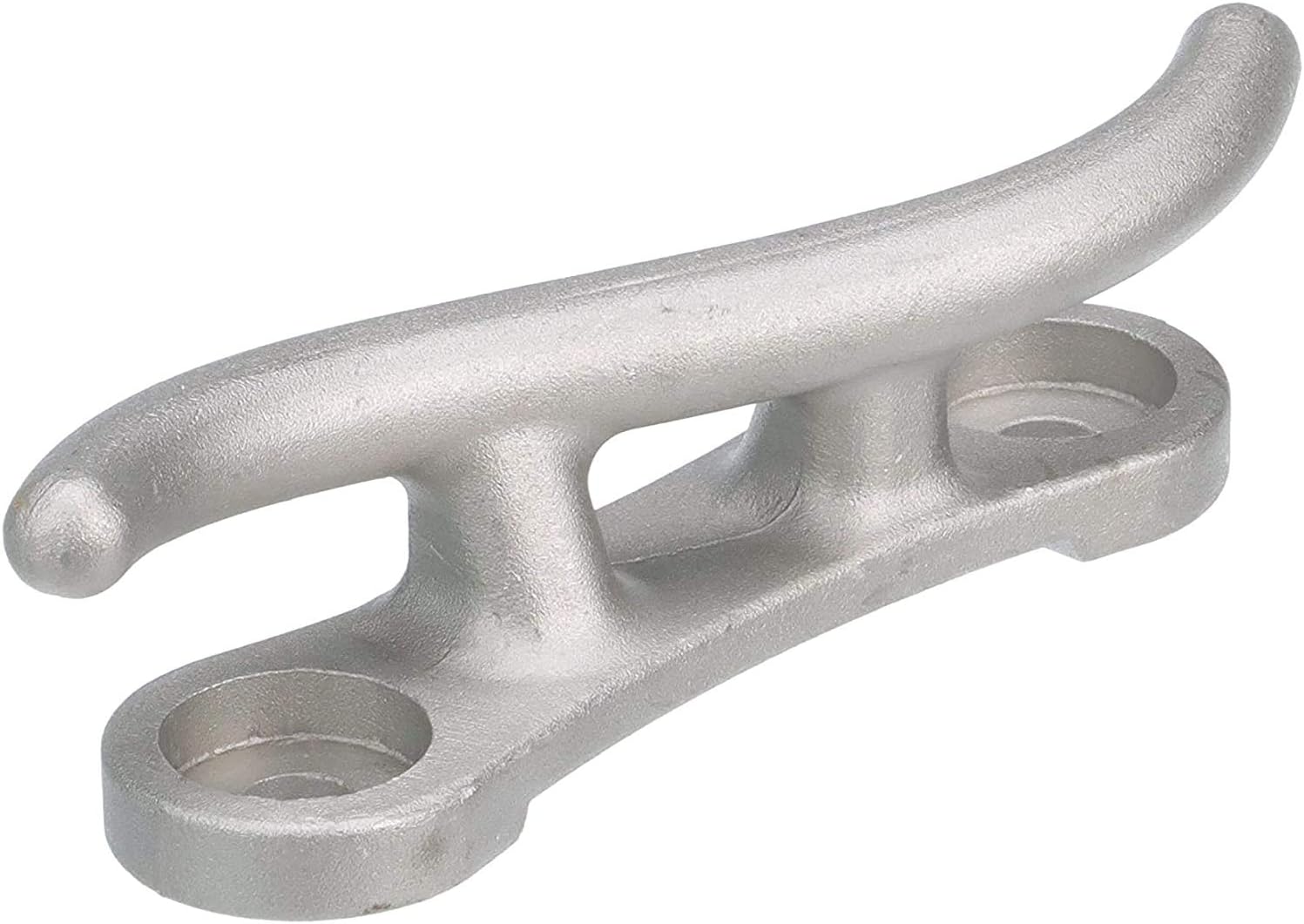
MarineNow
$153.00
In stock on Amazon
Check price on AmazonCast Aluminum — The Freshwater Value Case
Cast aluminum occupies interesting territory. Aluminum doesn’t rust the way iron does, and it’s meaningfully lighter than stainless — less relevant on a cleat than on a lifting component, but still a factor on floating dock sections sensitive to point-load weight. Owner review data on cast aluminum dock cleats is notable for the near-absence of complaints in freshwater applications, which is meaningful signal in itself.
The important caveat, noted in Boating Magazine’s dock hardware buyer’s guide (Boating Magazine, Bonnier Corporation), is galvanic corrosion: aluminum and stainless create a galvanic couple when in direct contact in a saltwater environment. Isolating fasteners with nylon or neoprene washers is the standard mitigation and is not always mentioned in installation instructions. For saltwater docks, this added complexity makes 316 stainless the simpler long-term answer. For a freshwater lake dock where budget matters and annual inspections are part of the maintenance routine, cast aluminum is a genuinely durable choice with strong real-world track records.
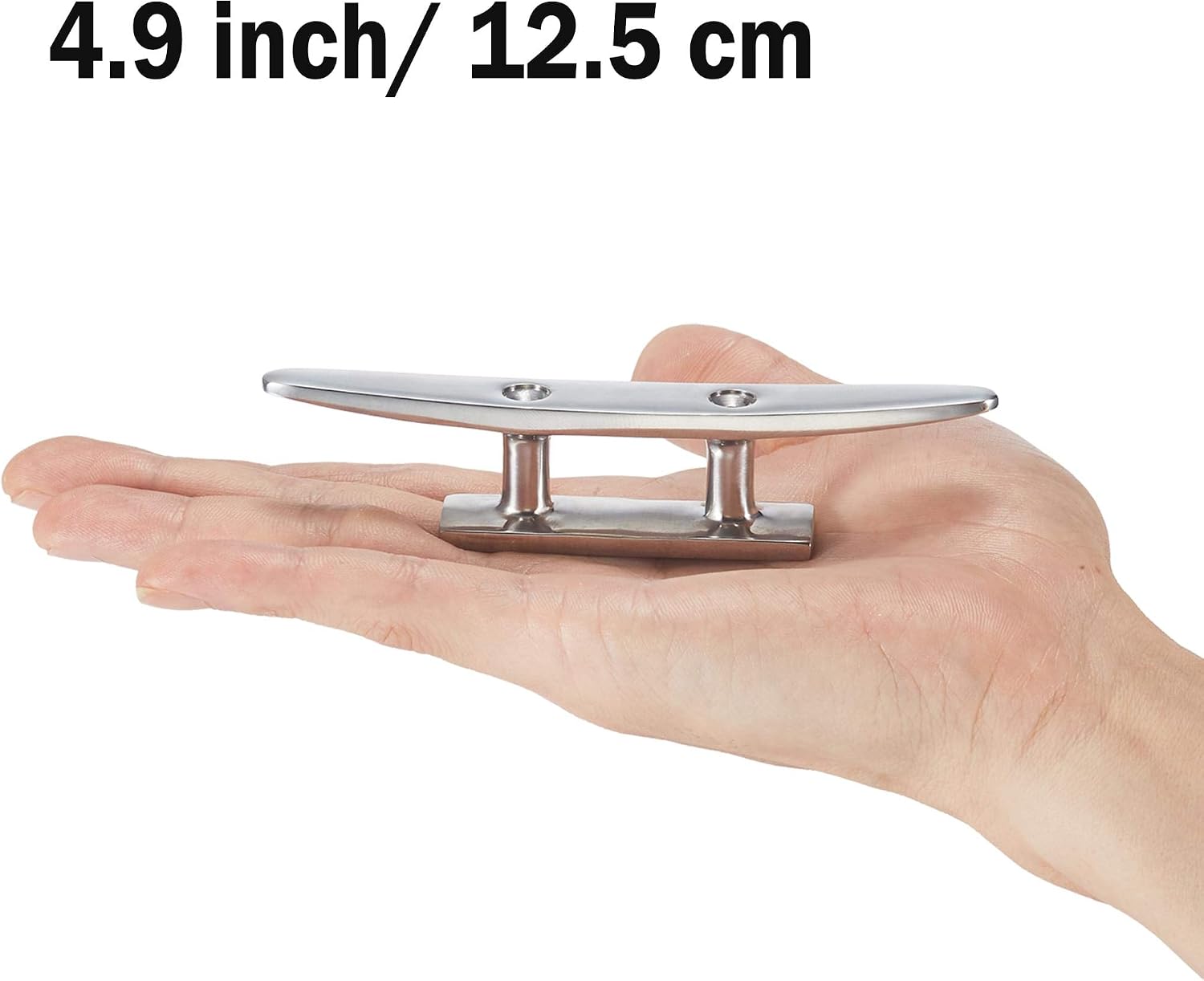
ZOMCHAIN
$18.79
In stock on Amazon
Check price on AmazonGalvanized Iron — The Budget Freshwater Option
Galvanized gray iron draws consistent praise for value and durability in freshwater environments. Practical Sailor (Belvoir Publications), in its cleat-strength and mounting-hardware review, notes that galvanized iron holds up well in freshwater but begins showing surface rust in saltwater environments within two to three seasons. Buyers confirm the finish difference versus stainless is visible even at point of purchase, and the gap widens over time.
For a lake dock, galvanized is a legitimate value option. For an ocean or tidal-river slip, it’s a compromise you’ll pay for in replacement costs. The honest use case is freshwater, budget-conscious, with a plan to inspect fasteners annually and replace them before rust weep stains the decking.
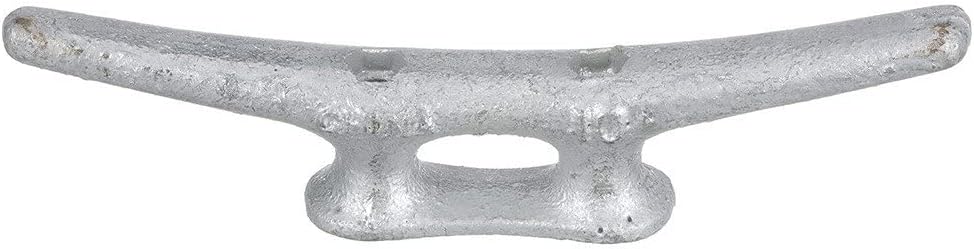
Seachoice
$13.33
In stock on Amazon
Check price on AmazonMaterial Comparison at a Glance
| Material | Saltwater Suitability | Relative Cost | Typical Finish Life (Freshwater) |
|---|---|---|---|
| 316 Stainless | Excellent | $$$ | 10+ years polished |
| 304 Stainless | Moderate | $$ | 5–7 years before pitting |
| Cast Aluminum | Good (with isolation hardware) | $$ | 7–10 years |
| Galvanized Iron | Poor–Fair | $ | 3–5 years surface rust |
Sources: Power & Motoryacht, marine-grade metals editorial overview (Sky & Telescope Media); Practical Sailor, cleat-strength and mounting-hardware review (Belvoir Publications) — both cited as plain-text named sources, no URLs
Installation: Backer Plates, Bolt Specs, and Where Real-World Failures Happen
Most buying guides skip this section. This is where actual failures occur.
Backer plates — flat plates installed on the underside of dock decking to distribute cleat load across a wider area — appear as optional in most product listings and as mandatory in most experienced-installer accounts. For fixed cleats, backer plates add meaningful holding strength by preventing mounting bolts from pulling through decking under load. For folding cleats, the case is even stronger: the mechanical pivot point concentrates stress differently than a fixed design, and multiple buyers describe backer plates as adding substantial strength rather than marginal improvement. This Old House (Dotdash Meredith), in its dock hardware installation guidance, frames backer plates as best practice whenever mounting hardware is subject to dynamic load — which a boat cleat absolutely is, particularly in chop or current.
On fastener selection: the pattern across 316 stainless cleat reviews is nearly universal. Buyers upgrade to stainless through-bolts with fender washers. The supplied screws in most cleat packages — even premium ones — are often minimum-spec zinc-plated hardware. In freshwater, this may not matter much in the short term. In saltwater, the fasteners will show corrosion before the cleat itself does, which means either remedial replacement work or rust weep stains on your decking. Purchasing a small set of 316 stainless machine bolts and fender washers at time of installation is inexpensive insurance relative to the labor cost of removing a corroded fastener from composite decking two seasons later.
One practical note from aggregated owner experience: fixed 316 stainless cleats have been successfully mounted on concrete dock structures using appropriate masonry anchors, with owners describing the result as secure and long-lasting. That’s useful context for anyone working with a concrete dock rather than wood or composite — the fixed-cleat format adapts more cleanly to non-standard substrates than folding designs, which require a flush, planar mounting surface for the fold-flat mechanism to seat correctly.
Frequently Asked Questions
What size cleat do I need for my rope diameter? The general rule, consistent with guidance published in Boating Magazine’s dock hardware buyer’s guide (Boating Magazine, Bonnier Corporation): cleat horn-to-horn length should be approximately one inch per 1/16 inch of rope diameter, with a practical minimum of six inches for most recreational dock lines. A 3/8-inch dock line (common for boats under 30 feet) pairs well with a six-inch cleat; a 1/2-inch line for a larger cruiser calls for an eight-to-ten-inch cleat. When in doubt, size up — a cleat slightly large for the line handles fine; one that’s too small creates dangerous friction angles.
Do I need backer plates for folding cleats, or is it overkill? Not overkill. The pivot mechanism on folding cleats concentrates load differently than a fixed design, and backer plates are the difference between a secure installation and one that begins pulling through under load during the first rough-water event. This Old House (Dotdash Meredith) frames dynamic-load dock hardware as a context where backer plates move from optional to best practice. Treat them as required, not optional.
Can I use the included screws, or should I buy stainless bolts? Buy stainless bolts and fender washers, especially in saltwater. Included hardware in most cleat packages — even quality ones — is typically zinc-plated and will show corrosion before the cleat itself. 316 stainless machine bolts are inexpensive relative to the cost of removing a seized fastener from decking a few seasons later.
Will 316 stainless cleats actually look different from galvanized after a few seasons? Yes, meaningfully so. Practical Sailor (Belvoir Publications), in its cleat-strength and mounting-hardware review, confirms the gap: galvanized iron cleats in freshwater typically show surface rust at three to five years. 316 stainless in the same environment holds a polished appearance for a decade or more with minimal maintenance. If dock aesthetics matter, the finish longevity of 316 justifies the price difference.
Are folding cleats strong enough for an overnight tie-up in choppy water? The hardware itself usually isn’t the weak link — the installation is. A folding cleat through-bolted with stainless hardware and a backer plate into solid decking handles standard overnight tie-up loads without issue. The same cleat mounted with included hardware, no backer plate, into soft composite is a materially different system. In locations with significant wave action or tidal surge, fixed cleats with heavier-gauge mounting hardware remain the more conservative specification.
Is cast aluminum really comparable to stainless for saltwater docks? For freshwater, cast aluminum performs well and generates minimal complaints in owner reviews. For saltwater, the concern is galvanic corrosion at fastener contact points. Proper isolation hardware largely mitigates this, but it adds installation complexity most buyers aren’t anticipating. For a saltwater dock, 316 stainless is the simpler long-term answer. For a freshwater lake dock with budget constraints and a plan for annual inspections, cast aluminum is a reasonable and durable choice.
The Bottom Line: An “If X, Then Y” Decision Rule
If your dock has regular barefoot traffic, children, or a tight walkway → folding cleats, 316 stainless where budget allows, mandatory backer plates, stainless through-bolts.
If your dock is a working tie-up with limited pedestrian traffic → fixed-horn cleats in 316 stainless (saltwater) or cast aluminum / galvanized (freshwater), stainless fasteners with fender washers regardless.
If you’re building or renovating a complete dock environment and aesthetics matter → 316 stainless fixed cleats are the specification that holds its finish and its value longest; folding cleats are worth the premium on high-traffic sections closest to the gangway.
If budget is the constraint and the environment is freshwater → galvanized or cast aluminum cleats are legitimate choices with strong owner track records, provided you schedule annual inspections and replace fasteners before they weep rust onto decking.
The cleat is not a glamorous purchase. But it’s the last connection between your boat and the dock, and the right installation decision — material, mounting hardware, backer plate — is the one you make once and don’t revisit for a decade.