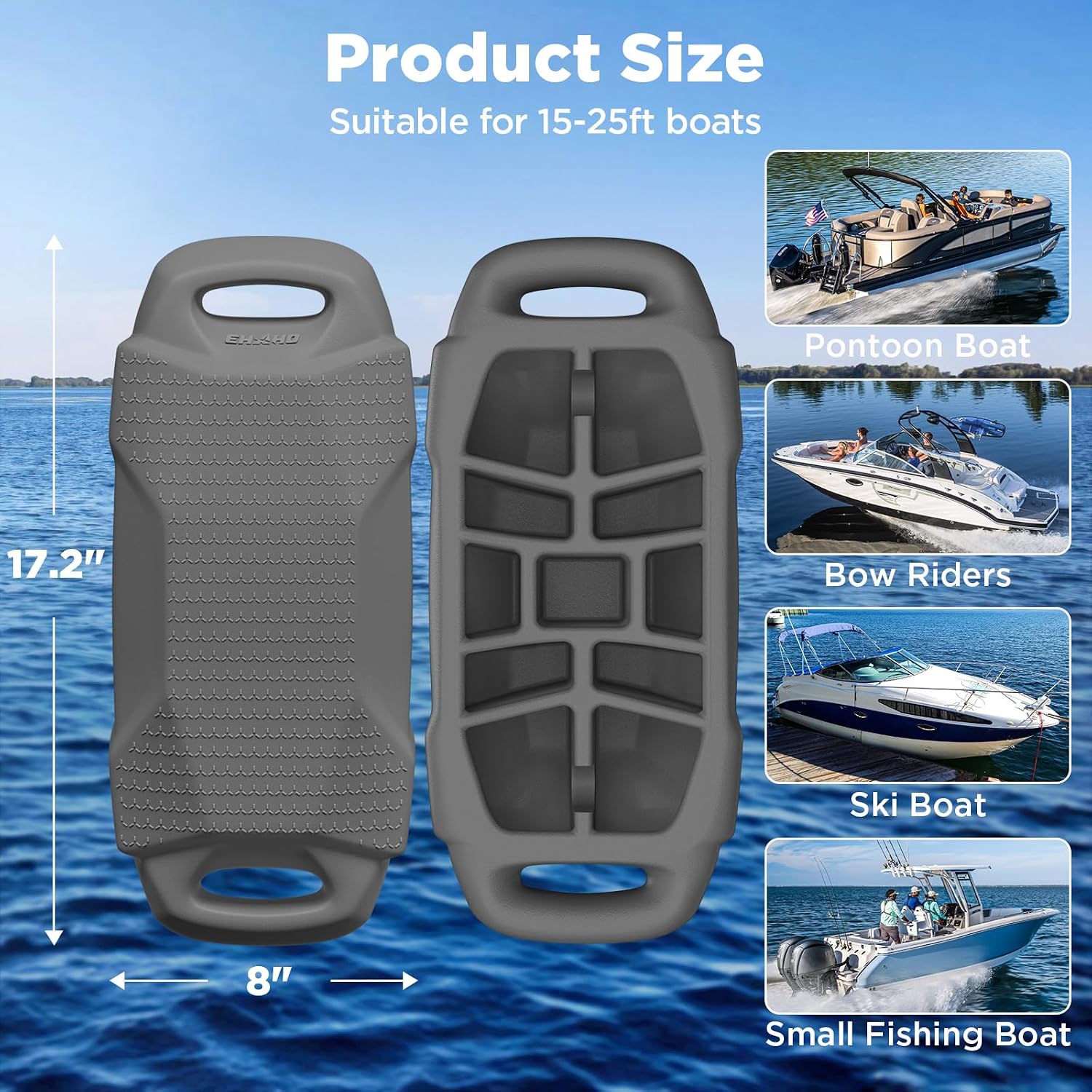
If you’ve ever watched a boat slowly grinding against a dock piling while tied up — that low, cringe-inducing squeal — you already understand what boat fenders are for. A fender (also called a bumper) is a cushion you place between your boat’s hull and a dock, piling, or wall to absorb the constant contact that happens from waves, wakes, and wind. Without them, you’re trading gel coat for dock lumber every time the water moves. The question this article answers is narrower and more useful than “do I need fenders?” — it’s which shape of fender actually does the job for your specific boat and dock setup. Flat solid-foam (EVA) fenders and round inflatable tube fenders dominate the market at every price point, and they genuinely solve different problems. By the end of this piece, you’ll have a clear decision framework built around hull geometry, dock configuration, and long-term ownership — not just a list of options.
The Core Geometry Problem (and Why It Matters More Than You Think)
Here’s the thing most fender buying guides skip: the shape of your hull’s contact point determines which fender profile works. And this is where round inflatables lose a very specific fight.
On a typical monohull runabout or center console, the hull curves inward below the waterline and meets the dock at the rub rail — a trim strip that runs along the hull’s widest point, usually made of rubber or vinyl. A round inflatable tube fender, hung vertically from the boat’s cleat, sits outboard of the hull. In calm conditions it’s fine. But when a wake rolls through and the boat presses firmly against the dock, a round fender can roll or shift, and the rub rail — which protrudes outward slightly — can contact the dock above or below the fender entirely. The fender ends up protecting the hull near the rub rail rather than at it.
Boaters who switch from round inflatables to flat EVA panels frequently report that their rub rail was getting scuffed even with round fenders deployed. The flat profile, mounted flush against the dock face or hull side, creates a broad contact patch that spans the rub rail and the hull section around it simultaneously. That’s not a marginal improvement — it’s a different contact geometry solving a different problem.
Practical Sailor, in their “Dock Fender Roundup: Materials and Longevity,” notes that EVA foam fenders — ethylene-vinyl acetate, the same closed-cell foam used in premium marine flooring — don’t compress unevenly under point-load pressure the way inflatables can, which makes them more consistent across the contact zone. The material’s closed-cell structure also means water doesn’t infiltrate and degrade the foam from the inside, an advantage that compounds over time in saltwater environments.
Where Each Format Wins: Three Scenarios That Define the Choice
Not every docking situation favors the same fender profile. Breaking the decision down by use case — rather than by product — clarifies the tradeoffs faster than any spec comparison.
The Dedicated Slip With Daily Use
For a boater with a fixed slip who docks the same vessel in the same spot every day, flat EVA panels mounted semi-permanently to dock legs are the strongest choice. The panels stay fixed; the boat comes to them. There’s no deployment or retrieval process, no re-inflation check, and no risk of a fender shifting position during a busy departure. The contact geometry is predictable because nothing moves.
Boating Magazine, in their guide “How to Fender Your Boat Properly,” reinforces this logic: consistent fender placement relative to the rub rail is the single biggest factor in whether a fender actually prevents gel coat damage. Fixed dock-mounted EVA eliminates placement variability entirely.
For pontoon boats specifically — flat-bottomed vessels with aluminum tubes as the primary hull structure — the flat EVA profile is particularly well matched. BoatTest.com’s “Pontoon Boat Buying Guide” notes that the flat tube profile of a pontoon presents an awkward contact geometry for round fenders, which are designed to nest against curved surfaces. On a flat aluminum tube side, round fenders can rotate or slip rather than staying seated. A flat EVA panel mounted parallel to the pontoon tube face maintains consistent contact without shifting.
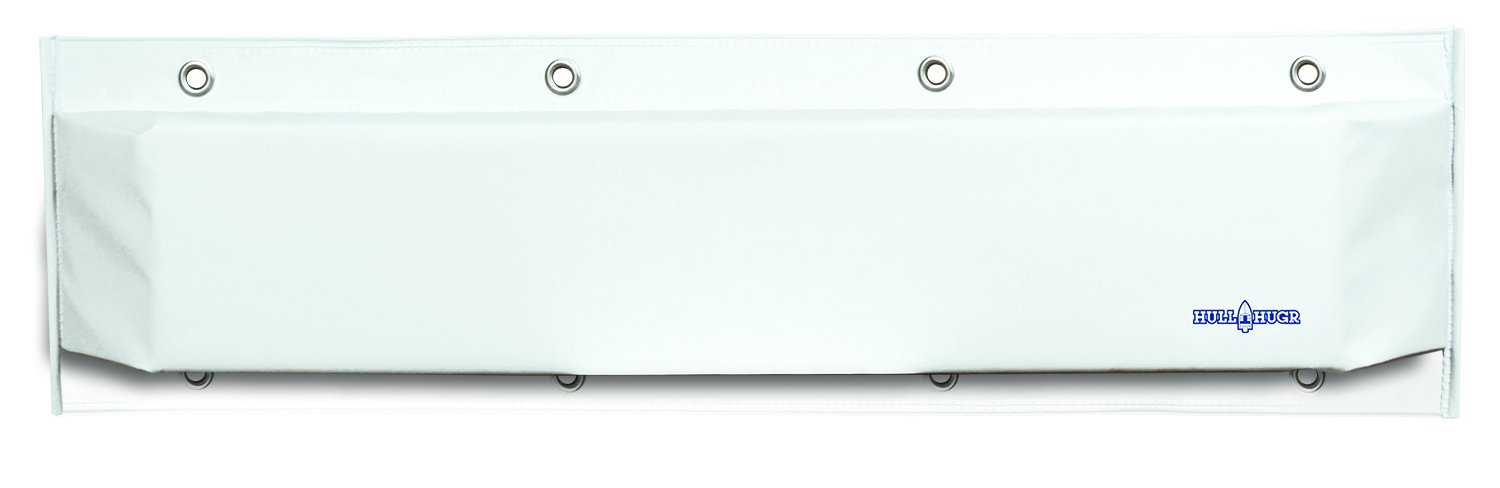
Hull
$43.19
In stock on Amazon
Check price on AmazonThe PWC Lift Slip With a Front Wall
For a personal watercraft (PWC, or jet ski) kept in a lift slip with a front wall, round inflatable tube fenders are the stronger choice. The scenario is specific: when a PWC is driven into the slip at speed, it contacts the front wall with forward momentum distributed across a curved fiberglass bow. A compressible, rounded inflatable absorbs that impact across the bow profile rather than creating a hard contact point. The round form accommodates the bow curve; the inflation pressure cushions the momentum.
A flat rigid EVA panel in this same scenario can concentrate impact force differently, and on a fast-moving PWC bow with tight dock clearance, the geometry mismatch can actually produce worse outcomes than the problem it’s meant to solve. Inflatables win on compressibility at point-of-impact for high-momentum entries in enclosed slip configurations.
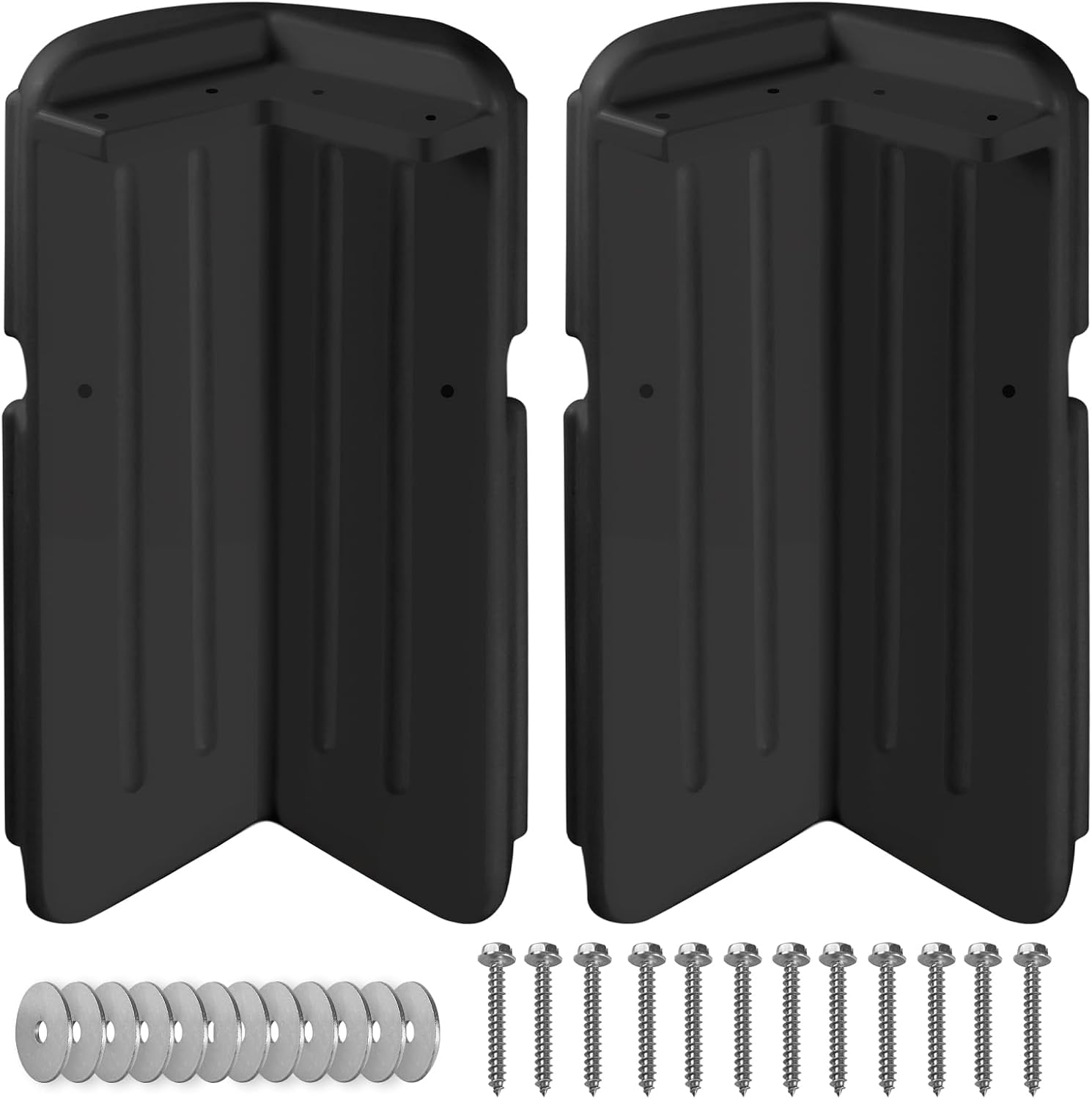
Dock
$42.99
In stock on Amazon
Check price on AmazonVariable-Clearance and Away-Dock Situations
For boaters who regularly dock at unfamiliar locations — transient slips, fuel docks, river lock walls, or marina visitor docks — round inflatables carried aboard are the more versatile tool. The compressible profile allows them to span varying distances as water levels and dock geometry change in real time. Boating Magazine’s “How to Fender Your Boat Properly” notes that round tube fenders hung vertically perform best when the vessel has enough freeboard to keep the fender centered at the rub rail — a condition that’s achievable when the boater can adjust placement before contact. In dynamic environments where contact geometry can’t be predicted in advance, the adjustability of boat-hung inflatables is the feature.
This is also where the long-term ownership calculus favors carrying both formats: EVA panels fixed to the home slip dock legs as the daily baseline, with inflatables stowed aboard for away-dock situations where geometry is unpredictable.
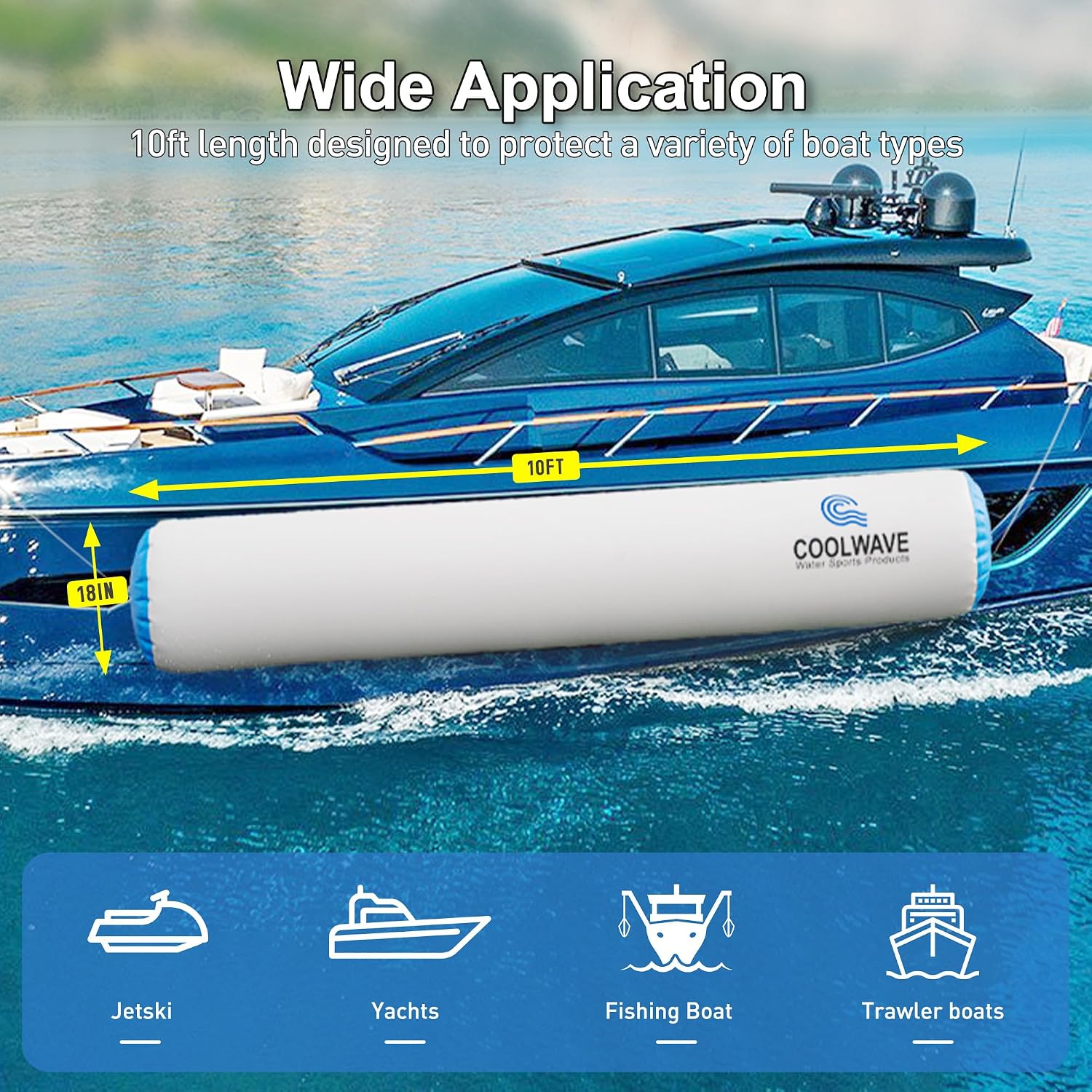
COOLWAVE
$109.99
In stock on Amazon
Check price on AmazonLong-Term Ownership: EVA Compression vs. Inflatable Stiffening
Neither format lasts forever unchanged, and the long-term ownership picture deserves honest framing before you commit to a primary choice.
Inflatable fenders develop a well-documented degradation pattern over time: the vinyl shell stiffens as it ages and weathers, reducing the material’s ability to absorb impact smoothly. UV exposure is the primary driver of vinyl stiffening, and any inflatable left in direct sun year-round will age faster than one stored seasonally. Valve quality is a secondary factor — higher-end inflatables use marine-grade brass valves that hold pressure better and resist corrosion longer than plastic alternatives. Re-inflation needs vary by climate: in regions with large temperature swings between cold nights and warm days, pressure loss accelerates and seasonal owners may need to top off pressure several times per year.
EVA foam doesn’t stiffen — it compresses permanently under sustained heavy use. Practical Sailor’s “Dock Fender Roundup: Materials and Longevity” notes that closed-cell EVA retains its structure better than open-cell foam alternatives, but sustained heavy compression from a large vessel pressing against a fixed EVA panel daily will eventually reduce the foam’s effective cushion depth. The critical difference in failure modes: inflatables can be re-inflated to partially restore performance, while compressed EVA panels need replacement. There is no way to restore EVA cushion depth once the foam has permanently deformed.
Power and Motoryacht, in “Dock Accessories Worth the Money,” notes that for high-traffic shared docks — marina loaner slips, charter operations, or community docks used by multiple vessels — EVA’s zero-maintenance profile frequently wins the practical calculus even if individual panel lifespan is shorter than a well-maintained inflatable. The labor cost of monitoring and topping off multiple inflatables on a busy dock adds up.
The honest maintenance summary: EVA requires no maintenance but cannot be restored once significantly compressed. Inflatables require periodic re-inflation and valve inspection but can recover between uses if maintained. For daily-use fixed slips, EVA wins on convenience. For seasonal or occasional-use boats, inflatables may deliver longer effective service life because the recovery interval is built into the format.
A Consumer Warning: Similar Product Names From the Same Brand
One purchasing error pattern appears consistently enough in marine retail contexts to be worth flagging directly. Some fender product lines — particularly brands that sell both dock-mounted and boat-hung versions of what looks like a similar product — use names that differ by only one word. “Dock Bumper” and “Marina Bumper” from the same manufacturer, for example, can be two distinct products with different geometries, mounting configurations, and intended use cases. At a glance in an online listing, the difference is easy to miss.
Power and Motoryacht’s “Dock Accessories Worth the Money” notes generally that fender product lines with model names differing by a single word are a documented source of return traffic at marine retailers — buyers receive the wrong configuration not because they failed to read, but because the naming convention didn’t give them a clear signal that these were meaningfully different products.
The practical defense: before completing any fender order, confirm the exact product name — not just the brand — and cross-reference the mounting configuration described in the listing against your specific dock or hull geometry. If the listing doesn’t clearly state whether the product mounts to the boat or to the dock structure, that’s a reason to contact the seller before purchasing, not after.
Comparison Summary
| Feature | Flat EVA (solid foam) | Round Inflatable (vinyl tube) |
|---|---|---|
| Typical contact patch | Broad / distributed | Narrow / point-load |
| Rub rail compatibility | High (spans rail) | Variable (can miss rail) |
| Pontoon tube compatibility | High (matches flat profile) | Low (tends to slip or rotate) |
| Dock-leg mounting | Yes — primary use case | Rarely practical |
| Saltwater longevity | Excellent (no valves or seams) | Good (valve corrosion risk) |
| Re-inflation required | Never | Periodically |
| PWC bow-impact absorption | Moderate | High |
| Maintenance over time | None until replacement needed | Valve checks and top-offs |
Frequently Asked Questions
Why do round fenders not work well with a pontoon rub rail? Pontoon boats have flat-sided aluminum tubes as their hull structure rather than a curved monohull. Round fenders are designed to nest against a curved surface — they can rotate or slip against a flat tube side. Flat EVA panels mounted parallel to the tube face maintain consistent contact without shifting. BoatTest.com’s “Pontoon Boat Buying Guide” identifies the flat tube profile as a primary reason pontoon owners report fender frustration with standard round formats.
Can I mount EVA flat fenders on my dock legs instead of hanging them from the boat? Yes, and this is one of the format’s most useful advantages. EVA flat fenders can be fixed semi-permanently to dock legs or dock faces, protecting any boat that uses the slip without requiring deployment from the boat each time. This is particularly valuable for shared docks or daily-use slips where the deployment step is a friction point.
How long do solid EVA fenders last compared to inflatables? EVA fenders typically outlast inflatables in structural integrity — there are no valves, seams, or vinyl shells to degrade. However, sustained heavy compression under frequent contact will eventually reduce cushion depth permanently. Practical Sailor’s “Dock Fender Roundup: Materials and Longevity” notes EVA holds up particularly well in saltwater environments because the absence of metal valve components eliminates a common corrosion failure point.
Do inflatable tube fenders require frequent re-inflation? It depends on conditions. In stable-temperature climates with seasonal use, re-inflation needs are minimal. In climates with large temperature swings, pressure loss accelerates and top-offs may be needed several times per season. Valve quality is a meaningful factor — brass marine-grade valves hold pressure significantly better than plastic alternatives over time.
Which fender type is best for a boat lift slip with a front wall? Round inflatables. The compressible, rounded profile absorbs forward bow momentum effectively at the front wall of a lift slip. A flat rigid EVA panel creates a harder contact point that can concentrate force on a narrower hull section during a fast entry, which is the wrong tradeoff in an enclosed slip with a fixed front wall.
The Decision Rule
If your primary concern is rub rail protection on a monohull, consistent coverage on a pontoon, or a zero-maintenance fixed-slip setup — go flat EVA. If you’re protecting a PWC lift slip, managing variable-clearance docking at unfamiliar locations, or need a fender that travels with the boat — go inflatable. Most owners with a dedicated home slip end up running both: EVA panels on the dock legs as the daily baseline, inflatables stowed aboard for away-dock situations where geometry is unpredictable. That’s not hedging — it’s correct tool allocation based on what each format actually does well.