Dock bumpers are the strips, cylinders, or cushions you attach to the edge of your dock — or hang from your boat — to absorb the impact when a vessel pulls in or rocks against the structure in wind and wake. They’re the unglamorous line item on every dock build, which is exactly why people under-specify them and end up replacing them every two or three years. The good news: material choice is the whole game here. Pick the right one for your environment and you’re looking at a decade-plus of service. Pick wrong and you’re scrubbing chalky residue off your hull finish and sourcing replacements before the second Memorial Day. This guide breaks down the three main material categories — UV-stabilized PVC, closed-cell foam, and inflatable vinyl — with clear tradeoffs so you can make a confident call whether you’re outfitting a single slip or specifying hardware across a full dock renovation.
Why Material Grade Matters More Than Price Tag
This is the part that surprises a lot of first-time buyers: a $12 foam bumper and a $45 PVC bumper can look nearly identical on a product page, but they behave completely differently after 18 months of direct sun, freeze-thaw cycles, and saltwater splash. The failure modes are different too, which matters when you’re deciding what’s worth spending up on.
UV degradation is the primary killer across all three material categories. Ultraviolet radiation breaks down polymer chains — the molecular structure that gives plastics and foams their flexibility and strength. Practical Sailor’s published evaluation of marine fender materials and UV degradation rates notes that lower-grade PVC without UV stabilizers begins surface cracking within one to two seasons in high-sun environments like the Gulf Coast or high-altitude mountain lakes, while UV-stabilized formulations using carbon black or HALS (hindered amine light stabilizers) compounds can hold structural integrity for eight to twelve years under comparable exposure. That spread is enormous, and it’s entirely a material-grade call, not a brand loyalty question.
Saltwater vs. freshwater adds another variable. In saltwater environments, foam products that aren’t fully sealed or encapsulated will absorb brine over time — the salt crystals expand and contract with temperature cycles and slowly degrade the foam’s cell structure from the inside. PVC and inflatable vinyl are generally impervious to salt absorption, which is one reason marina professionals working in tidal and coastal environments tend to default to them. Freshwater lake environments are more forgiving on this axis, but UV exposure and freeze-thaw stress are just as punishing as anywhere else.
Load matching is the third leg. A bumper rated for a 20-foot runabout is a different animal than one sized for a 30-foot cruiser with a 12,000-pound displacement. BoatingMag.com’s guide “How to Protect Your Boat at the Dock” emphasizes that undersized bumpers don’t just compress fully and bottom out — they shear their mounting hardware and transfer impact load directly to the dock frame, which accelerates fastener corrosion and can crack dock board edges over time. Size to the heaviest vessel that will regularly use the slip, not the average.
The Three Material Categories, Head to Head
Each category below is assigned a tier marker so you can match your budget and use case to the right starting point before reading the full breakdown.
UV-Resistant PVC Bumpers
PVC (polyvinyl chloride) dock bumpers are the default spec for most commercial dock installations, and for good reason: when the formulation is right, they’re nearly indestructible in normal marine use. The key phrase is “when the formulation is right” — virgin PVC with UV stabilizers and plasticizers compounded in performs completely differently from recycled-content or economy-grade PVC that skips these additives to hit a lower price point.
What to look for on the spec sheet: UV stabilizers explicitly called out (not implied), Shore A hardness rating in the 60–80 range for most dock bumper applications (softer = more cushion but less durability, harder = more durable but transfers more impact to the hull), and wall thickness. For straight dock-edge bumpers, wall thickness under 3/16 inch in a PVC extrusion is typically a low-quality indicator.
Profile options matter: D-profile, P-profile, and square/flat profiles each have a use case. D-profile is the workhorse for dock-edge applications — the flat face mounts to the dock face and the curved face contacts the hull, distributing impact load across the curve. P-profile (also called “P-strip”) compresses more aggressively under load and works well for lighter vessels or floating dock perimeters where the dock itself moves with wave action. Square and flat profiles are more of an architectural choice — they look cleaner on premium dock builds — but they offer less energy absorption than curved profiles at the same linear footage.
Typical price range in the current market (spring 2026): Commodity D-profile PVC runs $1.50–$3.00 per linear foot. UV-stabilized, commercial-grade extrusions from recognized marine suppliers run $4.00–$8.00 per linear foot. For a 24-foot dock face requiring two runs, the difference between economy and commercial spec is roughly $120–$240 — trivially small against a multi-thousand-dollar dock build, meaningful if you’re buying it again in two years.
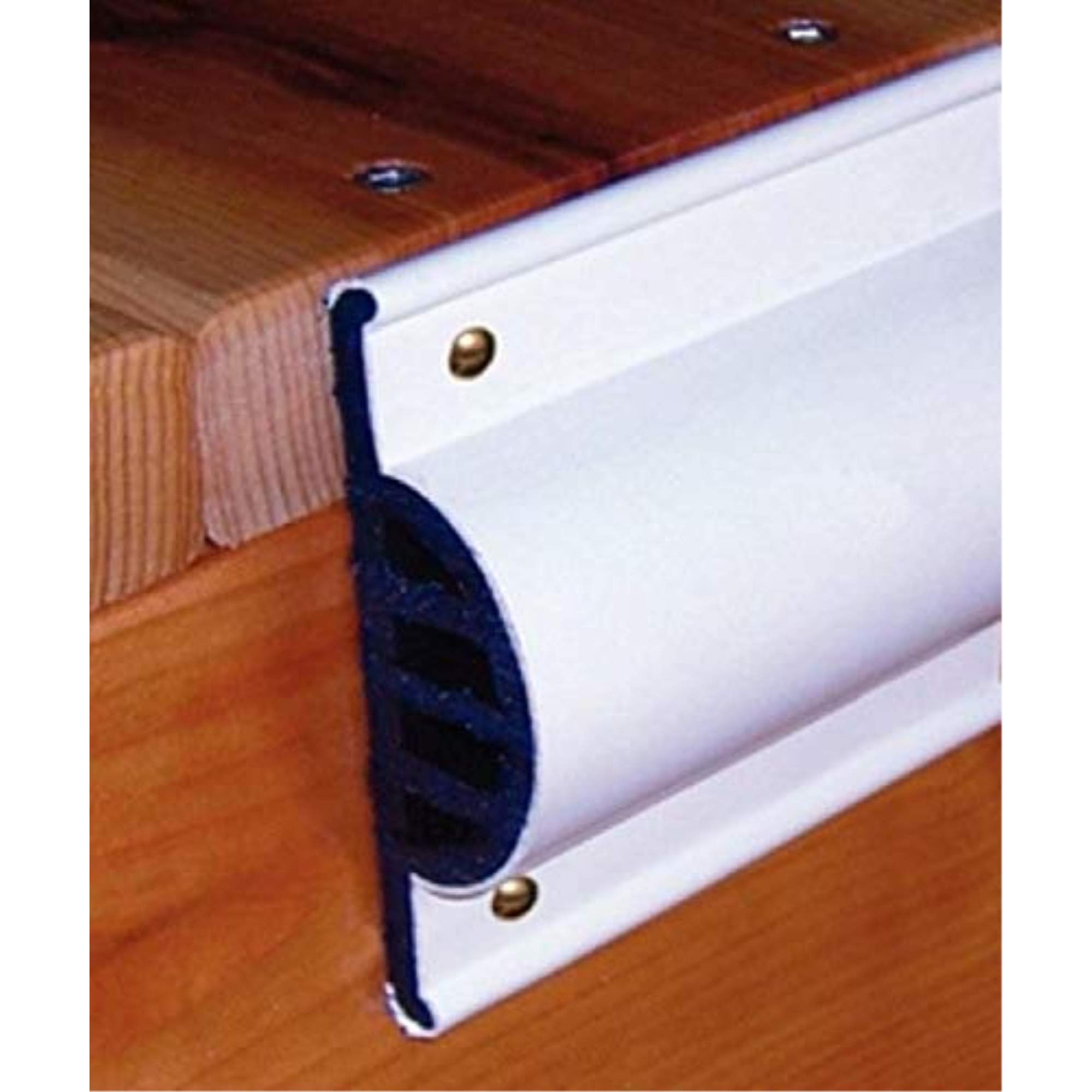
Taylor
$49.29
In stock on Amazon
Check price on AmazonClosed-Cell Foam Bumpers
Closed-cell foam bumpers — most commonly EVA (ethylene-vinyl acetate) or polyethylene foam — are the gentlest option for hull contact. “Closed-cell” means the foam structure consists of sealed individual bubbles rather than an open network, which gives it two important properties: it doesn’t absorb water, and it compresses and rebounds predictably without taking on a permanent set the way open-cell foams do.
This is the category that wins on hull protection for sensitive finishes. Power & Motoryacht’s article “Slip Setup: The Gear That Actually Protects Your Hull” specifically notes that owners of fiberglass boats with gelcoat finishes frequently prefer foam over hard PVC because foam’s compliance means it contacts the hull surface more gently and over a wider area — distributing the load instead of concentrating it at the profile’s hardest point.
The catch: UV resistance is genuinely harder to achieve in foam than in rigid PVC, because foam’s higher surface-area-to-volume ratio exposes more material to radiation per pound of product. High-quality marine-grade EVA foam bumpers are UV-stabilized and will hold up well; budget foam bumpers are not, and they will chalk, yellow, and surface-crack within two to three seasons. This Old House’s dock maintenance and hardware guidance flags this as one of the most common mistakes freshwater lake dock owners make — buying foam bumpers on price and replacing them constantly rather than investing once in UV-rated stock.
Where foam wins clearly: floating dock applications where the dock and boat are in constant soft contact rather than periodic hard impact, and anywhere you’re protecting a painted or finished hull surface where a hard PVC profile contact point would eventually leave a scuff track.
Typical price range: UV-stabilized marine foam bumpers in standard dock-edge form factors run $3.00–$6.50 per linear foot for quality stock. Cylindrical foam fenders (the teardrop and round types hung from cleats) range from $15 to $60 each depending on diameter and length.
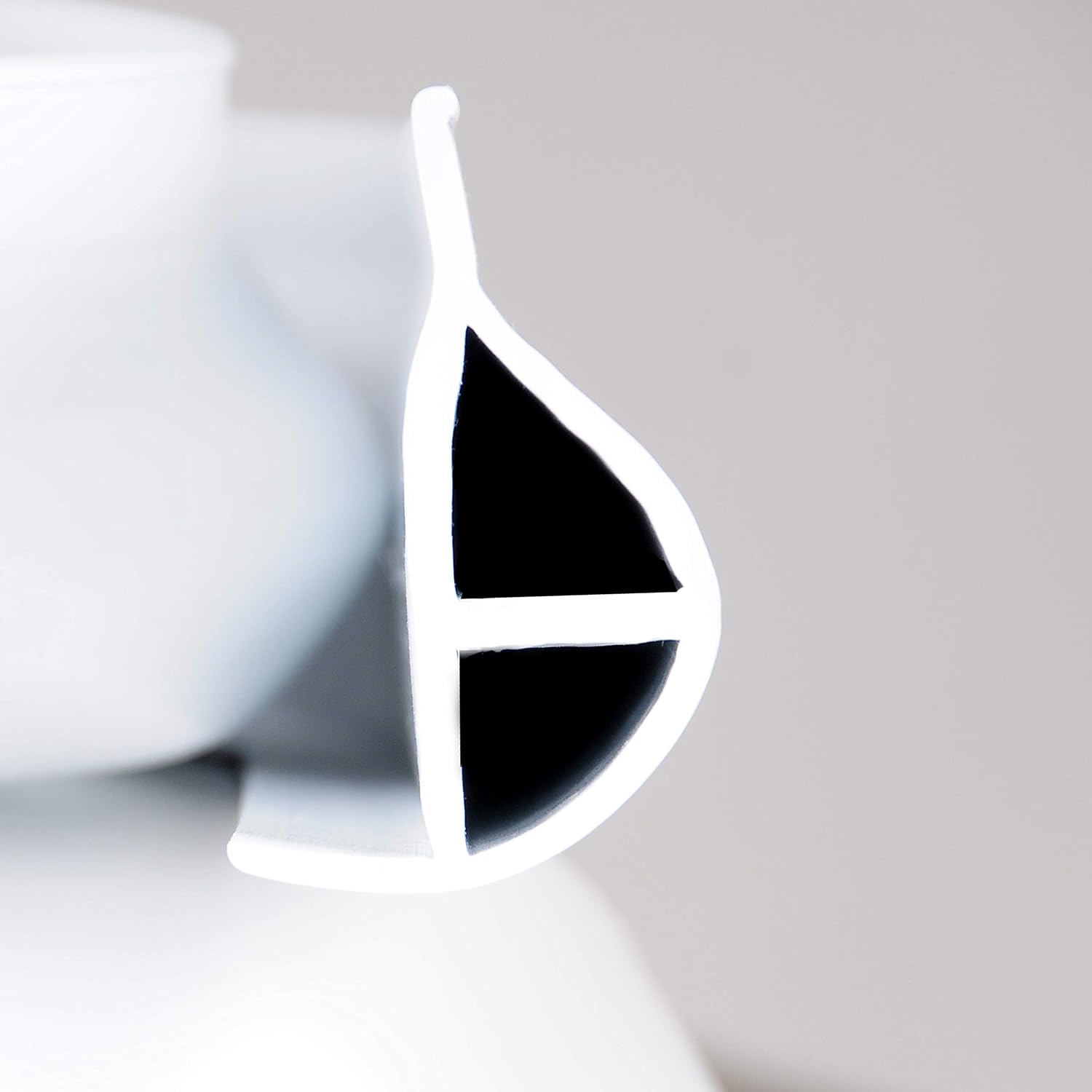
EasyFlex
$42.30
In stock on Amazon
Check price on AmazonInflatable Vinyl Fenders and Dock Bumpers
Inflatable fenders are the highest-energy-absorption option in the category and the default choice for larger vessels, commercial marinas, and anywhere wave action or current creates dynamic load situations rather than static resting contact.
The material is typically PVC or vinyl-coated fabric — the same family as inflatable dinghies — with an air bladder that deforms significantly under impact and then rebounds. The air volume does the work; the vinyl skin just contains it. This makes inflatables dramatically more effective at absorbing the kinetic energy of a moving vessel than any rigid or semi-rigid bumper of similar size.
The tradeoffs are real: Inflatables require inflation maintenance. A fender that’s lost 20% of its pressure is significantly less effective, and in cold climates, temperature drops between morning and evening can meaningfully change inflation pressure. They’re also puncture-vulnerable — not dramatically so in normal use, but marinas with rough concrete pilings or metal hardware contact points generate more incidents. Inflation monitoring becomes a regular habit, which is a genuine operational overhead that fixed bumpers don’t carry.
Where inflatables win clearly: Boats over 25 feet, any slip with significant wave action or tidal current, and anywhere you need maximum energy absorption in a small installed footprint. A 12-inch cylindrical inflatable fender absorbs more impact than a 12-inch foam cylinder of similar dimensions, because the air volume can deform through a much larger displacement range.
Typical price range: Quality marine inflatable fenders run $25–$90 each depending on size. Inflation-rated dock bumper systems start around $60 per unit and scale up with size.
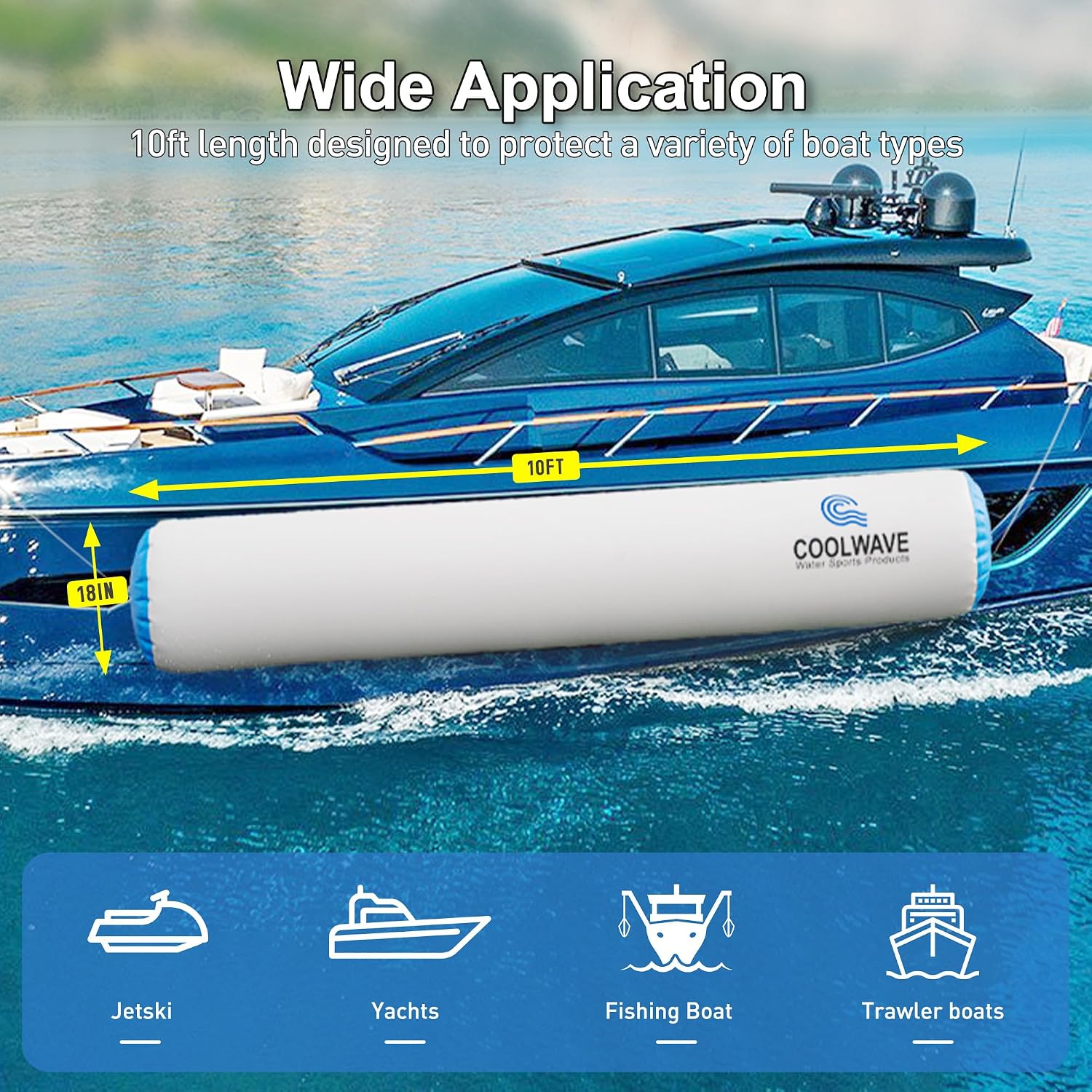
COOLWAVE
$109.99
In stock on Amazon
Check price on AmazonBy the Numbers
| Material | UV Lifespan (quality grade) | Water Absorption | Hull Gentleness | Maintenance | Tier |
|---|---|---|---|---|---|
| UV-stabilized PVC | 8–12 years | None | Moderate | Nearly zero | Taylor — $49.29 |
| Closed-cell foam (marine grade) | 6–10 years | None | High | Inspect annually | EasyFlex — $42.30 |
| Inflatable vinyl | 5–8 years (with care) | None | Highest | Pressure checks seasonally | COOLWAVE — $109.99 |
Lifespan estimates are based on published manufacturer ratings and aggregated owner documentation from marine hardware suppliers; saltwater and high-UV environments compress these ranges.
The Decision Framework: If X, Then Y
You’re specifying bumpers for a real dock right now. Here’s how to cut to the call:
If you’re building or renovating a fixed dock with a mixed-use slip (different boats, guests, rental): Spec UV-stabilized PVC D-profile as your dock-edge protection. It’s the lowest-maintenance, most abuse-tolerant option, and the price delta over economy PVC pays back in the first replacement you avoid. Add cylindrical foam fenders on hanging lines for boats over 22 feet.
If you’re protecting a single fiberglass or painted powerboat in a private slip: Closed-cell marine foam is the right call for hull contact surfaces. The gentleness-to-hull tradeoff is worth the slight durability premium over economy foam. Budget for UV-stabilized stock specifically — it’s the only variable that changes the five-year outcome.
If you’re on a floating dock system or managing a slip with meaningful wave action or current: Add inflatable fenders as your primary energy-absorption layer, with fixed PVC or foam as your dock-edge baseline. The two work together — fixed bumpers handle the routine resting contact, inflatables handle the dynamic load events.
If you’re in a saltwater tidal environment: Hard PVC and inflatable vinyl are your materials. Avoid exposed foam in any form that isn’t fully encapsulated — open or semi-closed foam in salt contact eventually becomes a maintenance problem regardless of UV rating.
On budget: The place to spend up is always material grade, not brand marketing. A $4-per-foot UV-stabilized PVC extrusion from a no-name marine supplier is a better buy than a $3-per-foot branded product with no UV specification on the data sheet. Ask for the spec sheet. If a supplier can’t produce one, that’s your answer.
The unsexy reality of dock hardware is that bumpers are the component most likely to be under-specified on a well-planned build — and the one that causes the most downstream annoyance when they fail. Getting the material grade right once is a genuinely better investment than any other upgrade on this end of the dock budget.