A dock box is exactly what it sounds like: a lidded storage chest that lives on your dock, holding lines, fenders, life jackets, sunscreen, and whatever else accumulates over a boating season. Most of the time, material choice feels like a cosmetic decision — white box, teak-look trim, done. But if you’re on a northern lake anywhere that sees hard freezes, ice formation on the dock surface, and the repeated cycle of thaw-refreeze through late fall and early spring, material choice becomes a structural decision. Water infiltrates microscopic gaps, freezes, expands at roughly 9% greater volume, and either opens those gaps wider or, over enough cycles, cracks the material entirely. This Old House, in its cold-climate outdoor materials coverage, explains this mechanism clearly: porous and laminated materials are significantly more vulnerable than dense, homogenous ones because each freeze cycle propagates existing micro-fractures further. This guide breaks down the three materials you’ll actually encounter — fiberglass, rotationally molded polyethylene resin, and injection-molded plastic — rates their honest freeze-thaw lifespan, shows you the cost math, and ends with a clear if-then decision rule so you can stop second-guessing the spec sheet.
| EDITOR'S PICKTaylor Made Stow N’ Go Fibergla… | Mid-tier320 Gallon Waterproof Outdoor S… | Budget pick[LIFETIME 60012 Extra Large Deck…](https://www.amazon.com/dp/B0030GG2GC?tag=greenflower20-20) | |
|---|---|---|---|
| Material | Fiberglass | Resin | — |
| Capacity | — | 320 gal | 130 gal |
| Dimensions | 24x72x23 in | — | — |
| UV Resistant | — | ✓ | — |
| Hydraulic Rod | — | ✓ | — |
| Color | White | Black | Desert Sand/Brown |
| Price | $1,040.36 | $236.99 | $149.97 |
| See on Amazon → | See on Amazon → | See on Amazon → |
Why Freeze-Thaw Is a Different Problem Than UV or Saltwater Exposure
Most dock-box marketing copy focuses on UV resistance and, for coastal buyers, salt-air corrosion. Those are real concerns. But freeze-thaw stress operates through a completely different failure mechanism, and it’s one that manufacturers are notably less forthcoming about.
The core physics: water doesn’t need to pool inside your dock box to cause damage. It only needs to infiltrate the material itself — through surface micro-cracks, molding seams, lid gaskets, or hinge hardware penetrations. Once water is inside the material matrix or trapped in a seam, the freeze-thaw cycle does the work. The secondary failure mode is hardware. Stainless hinges and lid latches expand and contract at different rates than the box body. Over five to ten seasons, that differential movement fatigues the mounting points and can cause cracking radiating outward from every hardware hole — regardless of how good the box material itself is. This is worth tracking separately from bulk-material performance, because a $900 fiberglass box can be killed by a $4 hinge mount that wasn’t properly sealed.
The three materials your money buys in 2026:
- Fiberglass (hand-laid or chopper-gun laminate): A composite of woven or chopped glass fiber embedded in a polyester or vinyl ester resin matrix. Stiff, paintable, premium-looking. Structural integrity depends heavily on laminate thickness and resin quality — specs vary widely by manufacturer.
- Rotationally molded polyethylene (“roto-molded resin”): Plastic powder heated and rotated inside a mold until it coats the walls uniformly. Produces a seamless, thick-walled, monolithic structure. The dominant material in mid-to-premium outdoor storage, including serious dock boxes in the $400–$900 range.
- Injection-molded plastic: Melted plastic forced under pressure into a closed mold. Faster and cheaper to produce than roto-molding, but typically produces thinner walls and requires internal ribbing for rigidity. Dominates the sub-$250 dock box market.
Material-by-Material Freeze-Thaw Assessment
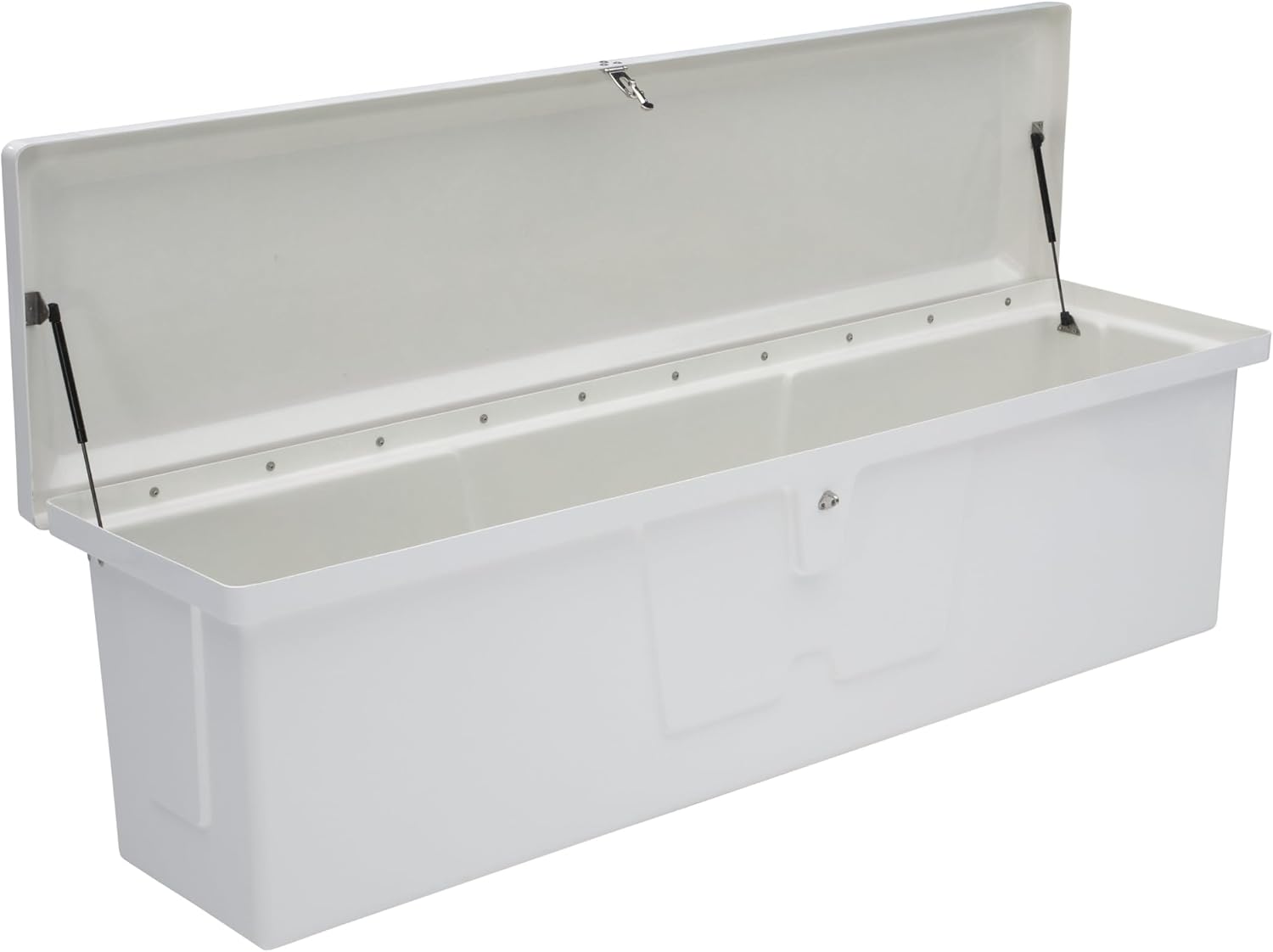
Fiberglass
In theory, fiberglass is an excellent cold-climate material. The glass fiber itself doesn’t absorb water; it’s the resin matrix and, critically, the gel coat surface layer that determines moisture infiltration. In practice, the failure stories follow a predictable pattern: gel coat checking (fine surface cracks that develop over years of UV exposure), followed by water infiltration into the laminate, followed by delamination driven by freeze-thaw cycling. Practical Sailor, in its dock box durability and cold-climate materials coverage, notes that gel coat checking typically begins appearing on lower-cost fiberglass storage products within five to eight years of sun exposure — at which point a northern lake owner’s timeline to structural delamination compresses significantly.
High-end fiberglass boxes using vinyl ester resin instead of the cheaper polyester resin used in most consumer dock boxes dramatically reduce moisture permeability. Vinyl ester is the same resin system used in performance boat hulls for exactly this reason. If a fiberglass dock box spec sheet doesn’t specify resin type, assume polyester. The price gap between polyester-laminate and vinyl ester-laminate boxes is real — often $200–$400 at the same size point — and in a freeze-thaw climate, it’s probably worth it if you’re going fiberglass at all.
Honest lifespan in freeze-thaw conditions: Polyester-laminate fiberglass: 8–15 years before delamination risk becomes material, assuming annual inspection and immediate sealing of any gel coat checks. Vinyl ester laminate: 15–20+ years with similar maintenance discipline. Both estimates assume the box is removed from the dock or its lid is cracked open to prevent ice load accumulation on the structure during winter.
Hardware caveat: Fiberglass is the most hardware-dependent of the three materials. Hinge and latch penetrations should be bedded with marine-grade polysulfide sealant — not silicone, which doesn’t bond reliably to gel coat — at installation. Owner feedback catalogued in Practical Sailor’s cold-climate dock gear coverage consistently notes that factory hardware installation on sub-$600 fiberglass boxes skips this step entirely.
Taylor
$1,040.36
In stock on Amazon
Check price on AmazonRotationally Molded Polyethylene Resin
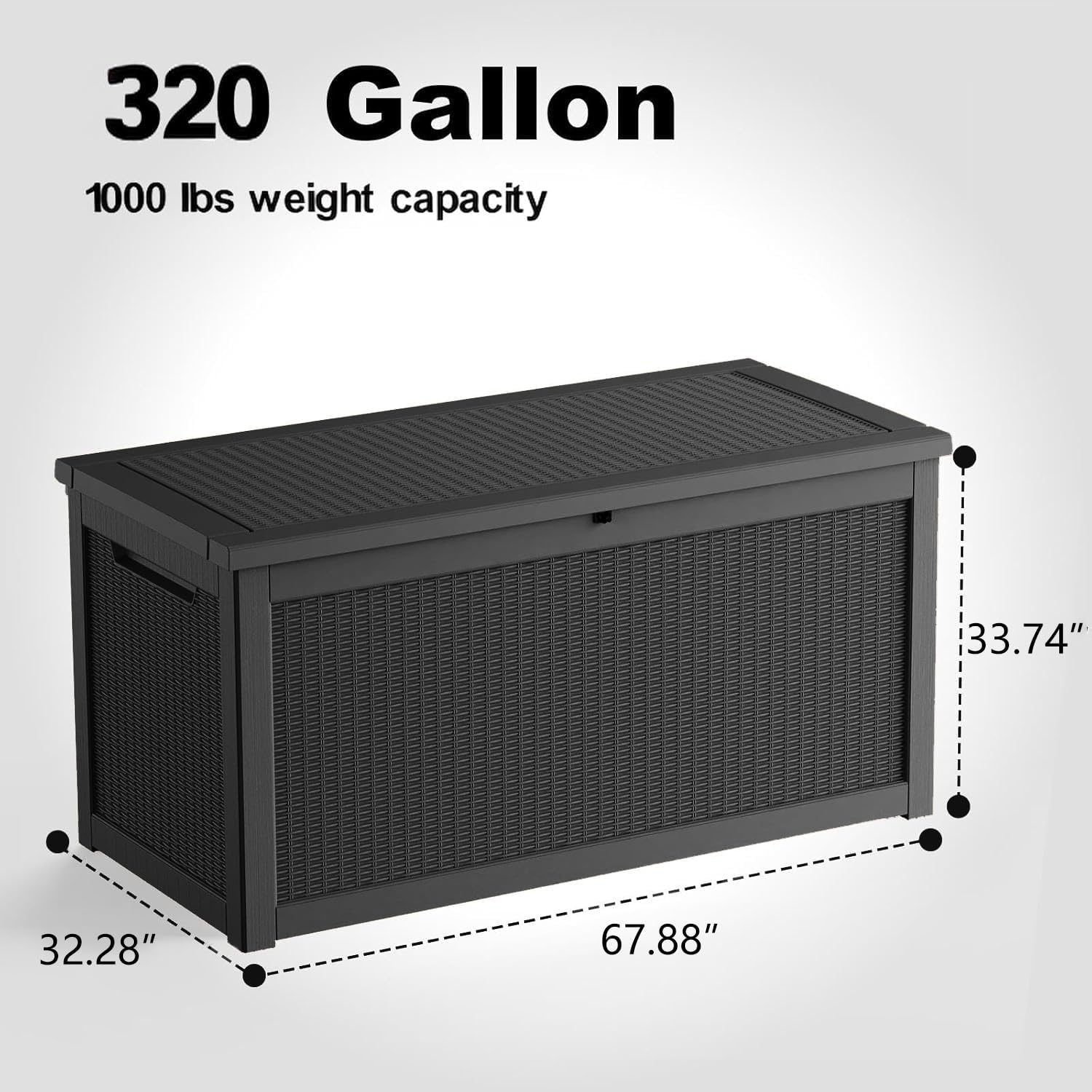
Roto-molded polyethylene is arguably the most cold-climate-native of the three materials, and the material science explains why. High-density polyethylene (HDPE) has a very low water absorption rate — typically cited at less than 0.01% by weight in published polymer material data sheets. There are no seams to infiltrate (the monolithic wall structure is a defining feature of the roto-molding process), and the material is ductile rather than brittle, meaning it flexes under stress rather than fracturing.
The freeze-thaw vulnerability that does exist in roto-molded boxes is almost entirely concentrated at hardware mounting points — the same issue as fiberglass, but with a different failure mode. Rather than a crack radiating outward, HDPE tends to creep (permanently deform) around overtorqued or thermally cycled fasteners. The fix is the same: proper bedding compound and appropriate fastener sizing at installation.
UV degradation is the more honest long-term concern for roto-molded boxes. HDPE that isn’t UV-stabilized chalks and becomes brittle over years of sun exposure. Quality manufacturers add UV stabilizer packages to their formulations, but budget roto-molded boxes sometimes skip this to hit a price point. Boating Magazine, in its dock storage buyer’s guide, flags UV stabilization as a key specification to confirm before purchase in the $300–$600 category, and it’s worth asking the manufacturer directly if the product literature is vague on this point.
A properly UV-stabilized roto-molded HDPE box, with hardware bedded at installation, is realistically a 20-year product on a northern dock. Power & Motoryacht’s dock gear and cold-climate storage coverage is consistent with owner-reported patterns showing no structural failure through 10–15 seasons of cold-climate use on premium roto-molded storage. The material genuinely doesn’t care about freeze-thaw cycling in the way fiberglass or injection-molded plastic does.
320
$236.99
In stock on Amazon
Check price on AmazonInjection-Molded Plastic
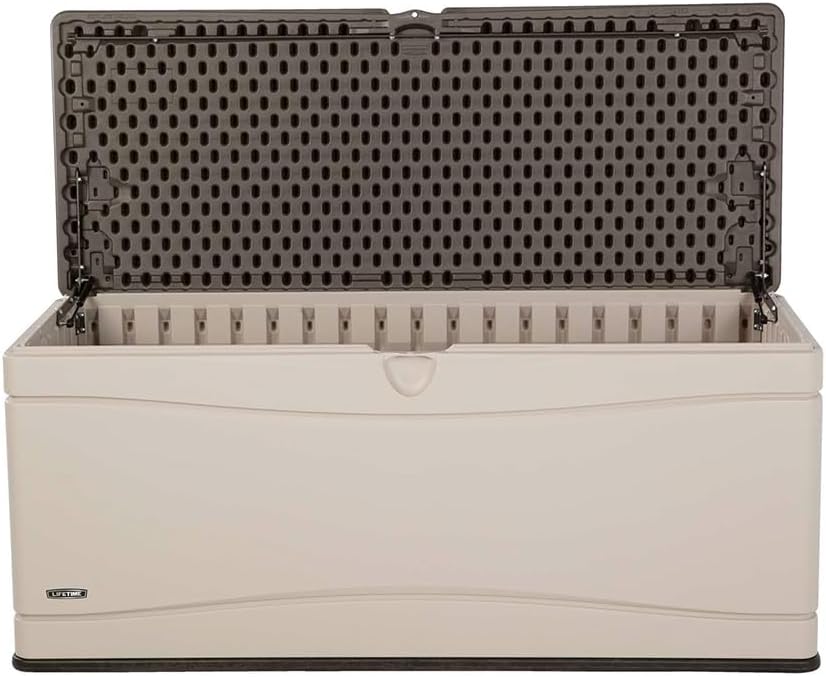
Injection molding produces a different microstructure than roto-molding. The rapid pressure-injection process creates internal stresses and orientation patterns in the polymer that roto-molding’s slow rotational cure doesn’t. This matters in freeze-thaw conditions because brittle fracture under thermal cycling tends to initiate at these stress concentrations, particularly at corners and around molded-in features like lid lip channels and internal rib junctions.
Wall thickness in injection-molded dock boxes is typically 3–6mm versus 8–14mm for roto-molded equivalents at the same size. Thinner walls mean less thermal mass and more rapid temperature cycling through the material — not a fatal flaw in mild climates, but a meaningful amplifier of freeze-thaw stress in Zone 5 and colder.
Power & Motoryacht’s cold-climate dock storage coverage is consistent with the broad pattern seen across owner reviews: injection-molded dock boxes at the sub-$250 price point show lid cracking, hinge-area fractures, and lid-channel deformation within three to seven seasons in hard-freeze climates. That’s not a failure of the product concept — it’s the honest cost-basis math. These boxes are built for price-point, not 20-year northern dock service.
Honest lifespan in freeze-thaw conditions: 4–8 years in Zone 5 or colder climates with normal use, declining toward the lower end if the box is left on the dock through freeze-up rather than removed or protected. The value proposition holds if you’re buying for a rental property with variable use, a secondary boat slip, or a situation where replacing every five to six years fits your economics.
LIFETIME
$149.97
In stock on Amazon
Check price on AmazonThe Numbers at a Glance
| Material | Typical Price Range (48”–60” box) | Freeze-Thaw Lifespan Est. | Key Vulnerability |
|---|---|---|---|
| Injection-molded plastic | $150–$300 | 4–8 years | Corner/lid cracking, thin walls |
| Roto-molded polyethylene | $350–$900 | 15–20+ years | UV degradation if unstabilized; hardware creep |
| Fiberglass (polyester resin) | $500–$1,100 | 8–15 years | Gel coat checking leading to delamination |
| Fiberglass (vinyl ester resin) | $750–$1,500+ | 15–20+ years | Hardware penetration sealing |
Lifespan estimates based on published polymer material data, owner-reported patterns, and cold-climate durability assessments published by Practical Sailor and Power & Motoryacht. Assumes Zone 5 or colder climate with at least 60 freeze-thaw cycles per year.
Installation Details That Change the Math
Two installation choices move the lifespan needle more than most buyers expect:
1. Hardware bedding. Every hinge screw, latch mount, and anchor bolt that penetrates the box body is a potential water infiltration point. Marine polysulfide sealant applied at installation adds roughly 30 minutes of work and substantially reduces hardware-area failures across all three material types. This step is consistently absent from factory installation on budget boxes — it’s not a warranty item for the manufacturer, but it is the difference between a 6-year box and a 10-year box in a hard-freeze climate.
2. Winter management. Whether you pull the box entirely, store it upside down under cover, or simply crack the lid open through freeze-up dramatically affects longevity. Water pooling inside a closed box and freezing solid exerts outward pressure on every seam and wall. Boating Magazine’s seasonal dock prep coverage and This Old House’s cold-climate outdoor storage guidance both point toward end-of-season drainage as a simple, high-return maintenance habit. Owners in northern lake communities who report 15-plus-year service life from mid-grade roto-molded boxes almost universally credit disciplined drainage as a contributing factor.
The Decision Rule
If you’re specifying a dock box for a northern lake property with genuine hard-freeze winters — Zone 5 or colder, docks that see ice loading — here’s the honest framework:
If your budget is under $300: Buy an injection-molded box with clear eyes. Treat it as a 5-year product, budget for replacement, and focus on hardware sealing and seasonal drainage to get full life out of it. Don’t buy cheap and then be surprised when the lid corners crack in year four.
If your budget is $350–$900 and longevity matters: A roto-molded polyethylene box from a manufacturer that specifies UV stabilization in their product literature is the most defensible choice for a freeze-thaw climate. The seamless construction is directly suited to the failure mechanism you’re trying to avoid, and the long-run durability data documented in Practical Sailor’s dock box durability coverage and Power & Motoryacht’s dock gear reviews backs the premium over both fiberglass and injection-molded alternatives at this price point.
If you’re specifying for a high-aesthetic dock build where the box needs to visually integrate with premium dock furniture, architectural cleats, or a powder-coated hardware scheme: fiberglass is worth the premium — but only if you can confirm vinyl ester resin rather than polyester laminate, and only if you commit to annual gel coat inspection. A $1,200 fiberglass box on a $15,000 dock build is proportionate. A $500 polyester-laminate fiberglass box on the same dock is a visual match with a shorter service life than the hardware around it.
If you’re a marine contractor specifying for a client: Roto-molded polyethylene is the lowest-callback choice for cold-climate installs. It ages predictably, it doesn’t generate a service call in year seven because someone skipped a hinge-mount sealant step, and it carries a lifespan story you can explain to a client in one sentence: no seams for freeze-thaw to exploit.
The freeze-thaw cycle doesn’t care about marketing claims. Material physics, wall thickness, and seam count are the variables that decide what’s still on the dock in 2041.