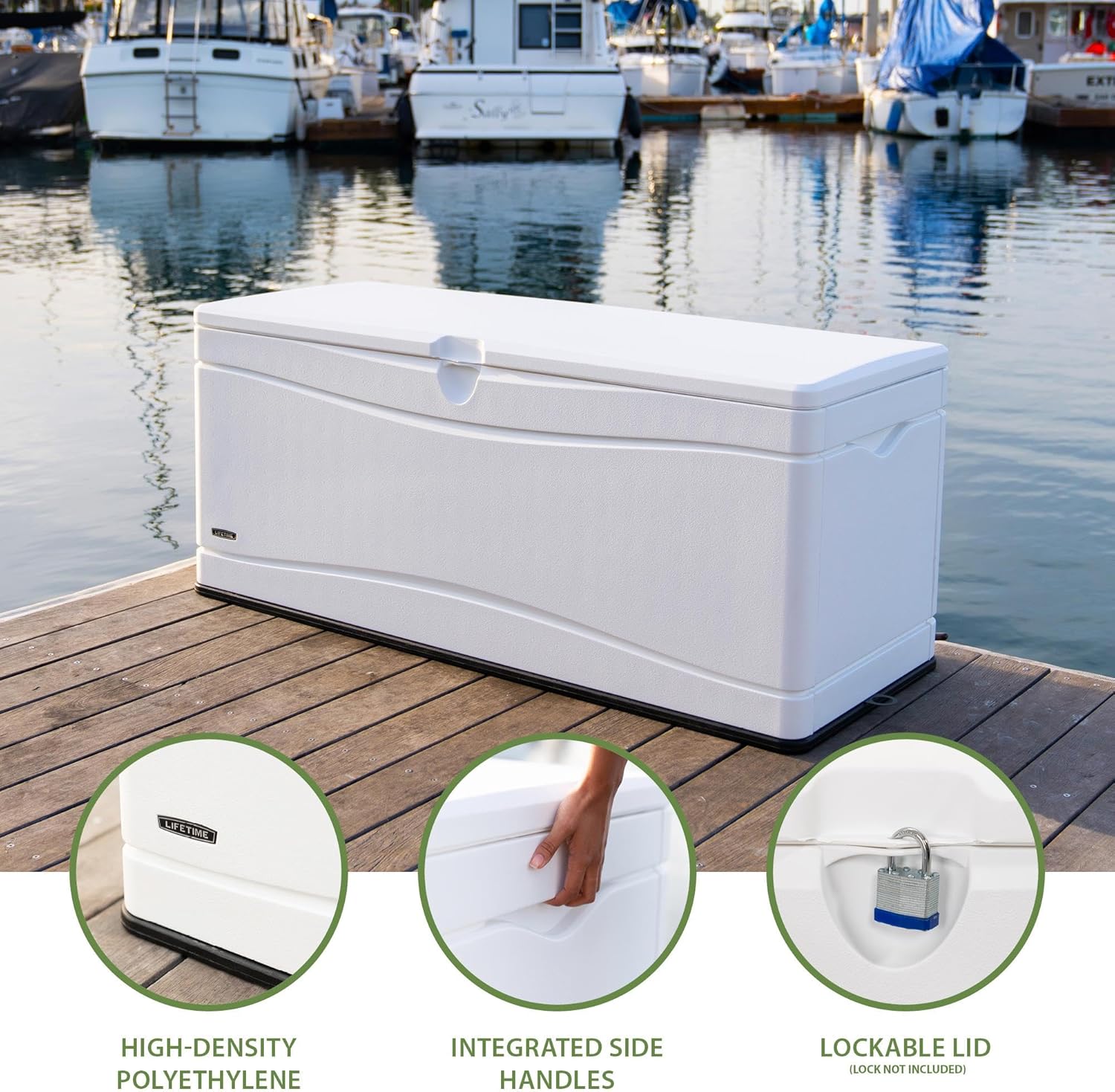
If you’ve spent any time at a marina or on a lakeside dock, you’ve probably seen a dock box — that rectangular storage chest bolted or strapped to the dock surface, used to keep life jackets, dock lines (the ropes that tie your boat to the dock), fenders (the inflatable bumpers that keep your hull off the dock), and gear organized and protected from weather. Dock boxes come in resin (a molded plastic composite), fiberglass, and occasionally aluminum, and they range from 50-gallon personal-sized units up to 320-gallon behemoths that can swallow a family’s entire seasonal kit. They sound simple. You order one, it arrives flat-packed, you follow the picture instructions, and it’s done in an afternoon. That’s usually true — except for a cluster of assembly pitfalls that show up repeatedly across owner reviews, regardless of brand or price tier. This article compiles what those owners learned, distills the recurring traps, and gives you a clear decision frame before you open that first bag of hardware.
| EDITOR'S PICK[LIFETIME Outdoor Storage Deck B…](https://www.amazon.com/dp/B07F9CDC64?tag=greenflower20-20) | Mid-tier[LIFETIME 60012 Extra Large Deck…](https://www.amazon.com/dp/B0030GG2GC?tag=greenflower20-20) | Budget pick[Devoko 100 Gallon Waterproof La…](https://www.amazon.com/dp/B0GQ555K8G?tag=greenflower20-20) | |
|---|---|---|---|
| Lockable | ✓ | — | ✓ |
| UV-Protected | ✓ | — | — |
| Waterproof | — | — | ✓ |
| Color | Arctic White | Desert Sand/Brown | Black |
| Price | $302.63 | $149.97 | $76.99 |
| See on Amazon → | See on Amazon → | See on Amazon → |
The Bottom Panel Problem: Why It Always Goes In Wrong the First Time
Across aggregated verified purchaser reviews for the Devoko 100-gallon dock box and the Lifetime 130-gallon unit (both the tan/brown and the gray colorways), one complaint surfaces so consistently it has to be treated as a design issue rather than user error: the bottom panel gets installed incorrectly on the first attempt, almost universally.
Here’s why. Most resin dock boxes ship as a flat kit of wall panels, a bottom panel, a lid, and a hardware bag. The side panels and end panels are visually similar — same thickness, same general profile, same exterior texture. The bottom panel is dimensionally close enough to a side panel that, when you’re working from vague pictogram instructions, it reads as interchangeable.
It isn’t.
One Devoko owner notes specifically that the bottom panel has a different face texture than all the wall panels, and that snapping it correctly into position requires deliberate force — more than feels comfortable the first time. The textural difference is the tell: if the surface facing up into the box interior looks or feels rougher or more utilitarian than your wall panels’ interior face, you’re looking at the bottom panel’s interior-facing side. Flip it wrong, and the structural channels that lock it to the frame are misaligned; you’ll get a box that technically closes but flexes at the base and won’t sit flat on a dock surface.
The fix before you start: Lay all panels out on the ground before you touch a single fastener. Compare textures face-to-face. The bottom panel is the one that feels different. Mark it with a piece of tape on the exterior face before assembly begins. Then orient it with the “different” face pointing upward into the box interior — that’s where drain channels and reinforcing ribs typically live on resin-molded bases.
For larger units — the 320-gallon class — the panel size makes this even more consequential. At that scale, you’re probably assembling with a second person anyway, but both of you should physically handle the bottom panel and agree on orientation before it goes anywhere near the frame. Reviewers of the 320-gallon hydraulic-rod box consistently praise its sturdiness once assembled, which suggests the engineering is sound; the orientation trap is just a documentation failure.
Lid Mechanisms: What Works, What Doesn’t, and One Color Surprise
Once the body is assembled, most owners shift attention to the lid — and here the feedback splits sharply by product.
Lifetime 130-gallon owners are enthusiastic about the lid stay. A lid stay is the hinged arm or strap mechanism that holds the lid open at a fixed angle while you’re loading and unloading gear, so you’re not using one hand to prop the lid and one hand to wrestle a life jacket out of the bottom. Reviewers across Lifetime’s listing consistently flag this as a genuine differentiator: the lid stays up even at a partially open position, not just at full open. That’s meaningful when dock boxes live outside in wind — a lid that only stays at 90 degrees will catch a gust and slam down on your forearm. A lid stay that holds at multiple angles keeps the box usable.
The 320-gallon hydraulic-rod box earns similar praise at greater scale. A 320-gallon lid is heavy — assembled resin plus structural ribbing makes for a panel that most owners describe as requiring two hands to lift without a gas spring or hydraulic rod assist. Reviewers note the hydraulic rod makes solo operation genuinely practical: you can prop the lid open, reach down into the full depth of the box, and retrieve gear without a second person holding the lid. If you’re specifying a box for a single-person household or a marina slip where you’re often working alone, the presence or absence of a hydraulic assist mechanism should be a primary filter, not an afterthought.
The color consistency issue on the Lifetime 130-gallon is worth naming explicitly. Multiple reviewers flag that the lid panel on one SKU (the gray-brown colorway) is a noticeably different shade than the body panels. The working explanation in the review community is that the lid is manufactured from a different material or in a different production run than the body panels — apparently a cost-related manufacturing choice. This matters most to owners who care about dock aesthetics or who are specifying boxes to match a coordinated dock environment. It won’t affect function, weather resistance, or structural integrity. But if visual cohesion matters to your client or to your own dock build, check the listing’s most recent photo reviews (not the product images) before committing to that colorway.
The Taylor Made Fiberglass Exception: Lock Fitment and What to Do About It
Most resin dock boxes use a hasp — a hinged metal loop on the lid that drops over a staple on the body, into which you thread a padlock shackle. Standard-width padlock shackles (the curved bar that forms the “U” of a padlock) fit most resin box hasps without issue.
The Taylor Made fiberglass dock box operates in a different product category — fiberglass construction means higher UV resistance and a more refined finish than mass-market resin, which is why it commands a premium — but reviewers consistently flag one specific fitment issue: the lock hole in the hasp is a bit small, and some standard padlocks won’t fit.
This isn’t a dealbreaker, but it’s a procurement step you need to take before the box is on the dock. The fix is selecting a padlock rated for marine use (typically 316 stainless steel shackle, corrosion-resistant body) with a 3/8-inch or smaller shackle diameter. Most “standard” padlocks run 5/16 to 7/16 inch shackle diameter; the Taylor Made hasp is reported to be tighter than the high end of that range.
Before you order, pull the spec sheet for whatever lock you already own or plan to buy and measure the shackle diameter. If you’re outfitting multiple boxes at a shared HOA dock or marina, standardize on a single lock model and order it alongside the box — don’t assume whatever you have in the shed will thread through.
By the Numbers: Assembly Complexity at a Glance
| Box Class | Typical Panel Count | Solo Assembly? | Lid Assist Mechanism |
|---|---|---|---|
| 100-gallon resin (Devoko) | 6–8 panels | Yes, but awkward | Manual hold / none |
| 130-gallon resin (Lifetime) | 6–8 panels | Yes, manageable | Multi-position lid stay |
| 320-gallon resin | 8–12 panels | Strongly recommended: two people | Hydraulic rod standard |
| Fiberglass (Taylor Made) | Minimal assembly | Yes, typically | Manual / hasp hardware |
Frequently Asked Questions
Can I assemble a 130-gallon or larger dock box by myself?
A 130-gallon box — in either the Devoko or Lifetime class — is technically a solo assembly job, but owners consistently describe the experience as “manageable, not easy.” The panels are light enough to handle alone; the challenge is holding one panel in position while aligning and snapping or fastening another. If you have a flat, clean work surface (a garage floor, not a dock), you can brace panels against a wall and work methodically. At 320 gallons, two people are strongly recommended — not because any single panel is unmanageable, but because the base panel alignment and squaring the frame before fastening requires a second set of hands to hold things true.
Why does the bottom panel feel different from the side panels, and which way does it face?
The bottom panel on most resin dock boxes is molded with a different interior surface texture — often ribbed or slightly rougher — because it carries drainage channels and structural reinforcement that the wall panels don’t need. The “different” surface faces upward into the box interior. Before assembly, lay all panels out, identify the one that feels or looks different on one face, tape its exterior, and orient accordingly. Owners who flip it report a box that snaps together but sits unevenly and flexes at the base.
Will a standard padlock fit the hasp on a resin deck box?
For most resin boxes, yes — standard padlock shackle diameters (5/16 to 7/16 inch) fit the hasp without modification. The exception is the Taylor Made fiberglass box, where reviewers consistently note the lock hole is tighter than standard. For that box, verify your padlock’s shackle diameter is 3/8 inch or smaller before purchasing. For any marine-environment box, a 316 stainless shackle is worth the small premium over zinc-plated steel to avoid corrosion seizure.
How weather-tight are these boxes in a rainstorm or marine environment?
Resin dock boxes are weather-resistant, not waterproof. The lid-to-body seal on most units will shed rain adequately in normal storms, but sustained horizontal rain or wave splash can introduce moisture at the seams. Owners storing electronics or documents report using a small desiccant pack inside the box. Fiberglass boxes (Taylor Made class) carry a slightly more refined seal but are similarly not rated for submersion. For freshwater dock environments — the majority of the DockQueen readership — weatherproofing is sufficient for seasonal gear, lines, and PFDs. Saltwater and coastal marina environments will expose the hardware (hinges, hasps) to accelerated corrosion; prioritize boxes with 316 stainless or marine-grade coated hardware at those installations.
Does the lid hold itself open while I load and unload gear?
It depends on the box. The Lifetime 130-gallon lid stay mechanism is specifically praised in reviewer aggregates for holding the lid at multiple angles, including partially open positions — useful in wind. The 320-gallon hydraulic-rod units hold the lid open with a gas spring or hydraulic assist, making solo operation at that scale practical. Base-tier 100-gallon resin boxes typically have no lid-stay mechanism; you’ll prop the lid yourself or have a helper. If solo operation matters, make lid-stay hardware a filter criterion before you buy, not a feature you discover (or don’t) on assembly day.
Are the colors consistent between lid and body panels?
Usually yes — but not always. Reviewers of the Lifetime 130-gallon in the gray-brown colorway specifically flag a visible shade mismatch between the lid and the body panels. The manufacturing explanation appears to be different production runs or different material batches for the lid versus the body. The color difference is cosmetic only and does not indicate a structural or weather-seal issue. If you’re building a coordinated dock aesthetic, check the most recent photo reviews from verified purchasers on current inventory — manufacturer product images are rendered and won’t show this variation.
The Decision Frame: If X, Then Y
You’re either buying your first box, upgrading, or specifying for a client. Here’s the clean version:
- If you want the easiest lid experience and don’t mind checking colorway consistency: the Lifetime 130-gallon with the lid stay is the most-praised mid-size option in aggregated reviews.
- If you’re working alone with a large seasonal gear load: a 320-gallon hydraulic-rod box is the only realistic solo-operable option at that volume — don’t fight a heavy lid without the assist.
- If dock aesthetics and material quality are primary (fiberglass finish, UV stability): the Taylor Made fiberglass box earns its premium, but budget a few minutes to source and verify your padlock before it arrives.
- In every case: before you touch the first fastener, lay out all panels, identify the bottom panel by its different face texture, tape it, and orient it interior-face-up. That one step eliminates the most common assembly failure across every product reviewed here.