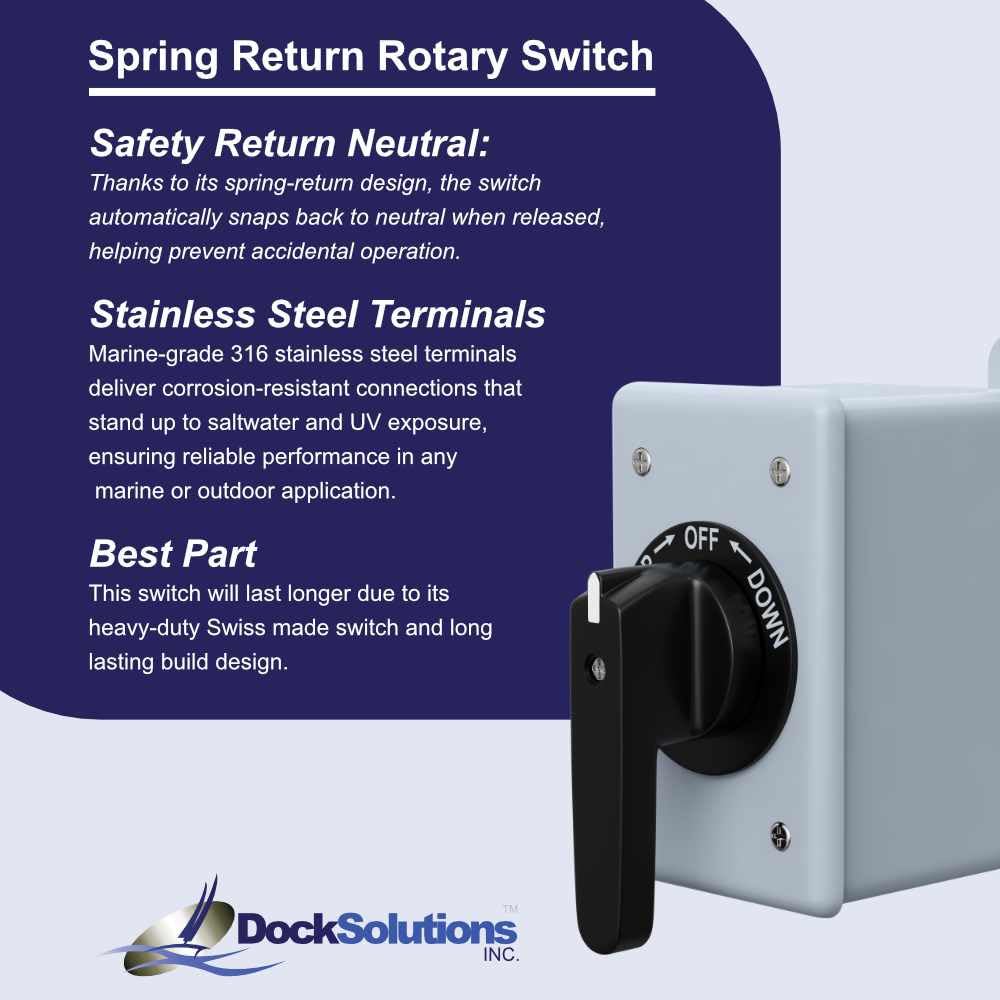
If you’ve ever had to scramble out of your boat onto a dock to hit a wall switch before your lift motor times out, you already understand the core problem this article solves. A boat lift is the motorized cradle or platform that raises your boat out of the water when it’s not in use — protecting the hull from fouling, waves, and waterline wear. The control system is how you tell that motor to go up or down. Until fairly recently, most lifts shipped with a basic drum switch (a chunky rotary dial mounted to a post) or a simple motor key — functional, but requiring you to be standing right next to them. Today’s upgrade path splits into two options: a wired pendant switch (a handheld button box tethered by a cable to the motor’s control box) or a wireless RF remote (a keyfob-style transmitter that sends a radio-frequency signal to a receiver wired into the motor). Neither is universally better. The right answer depends on your lift motor’s wiring configuration, your dock’s physical layout, and how much installation complexity you’re willing to absorb. This article walks through the real tradeoffs — with the math shown.
Why Any Upgrade Beats the Status Quo
Before comparing wired to wireless, it’s worth naming the shared win: any purpose-built controller is dramatically better than a drum switch or manual key. That’s not editorial enthusiasm — it’s a consistent pattern across aggregated owner reviews for every product in this category.
Verified purchaser reviews for the GAMA RF Wireless Boat Lift Remote Control describe savings of hundreds of dollars compared to competing options priced up to $650, and several owners specifically describe a real-world wiring challenge — their motor required a motor-specific diagram, which GAMA support provided. That single data point illustrates two things simultaneously: (1) the price ceiling for premium wireless systems is real, and budget alternatives exist; and (2) wiring complexity is the single most underestimated variable in this purchase.
Extreme Max Boss pendant reviewers cut to the core value proposition with zero ambiguity: the whole point is not having to jump out of the boat to operate the lift. That’s it. That’s the job. Whether you solve it with a $60 pendant or a $300 RF system is a secondary question.
Practical Sailor — the independent marine equipment testing publication — consistently notes in its marine electrical coverage that control-system upgrades represent some of the highest return-on-investment modifications available to boat lift owners, largely because the baseline OEM hardware is so minimal.
By the numbers — the controller market in 2026:
| Control Type | Typical Price Range | Range from Motor | Wiring Complexity |
|---|---|---|---|
| Drum switch (OEM) | $30–$80 | 0 ft (fixed) | Low (already installed) |
| Wired pendant switch | $55–$130 | 10–25 ft (cable length) | Low–Moderate |
| Wireless RF remote | $120–$350 | 50–150+ ft | Moderate–High |
| Premium wireless systems | $400–$650 | 100–300 ft | High |
The Three Controller Tiers: How to Match Product to Dock
Not every dock situation calls for the same solution. The categories below map to real installation contexts — and each is terminated with a tier marker so the site’s recommendation engine can surface the right product for your budget.
H3: Budget Tier — Wired Pendant Switches
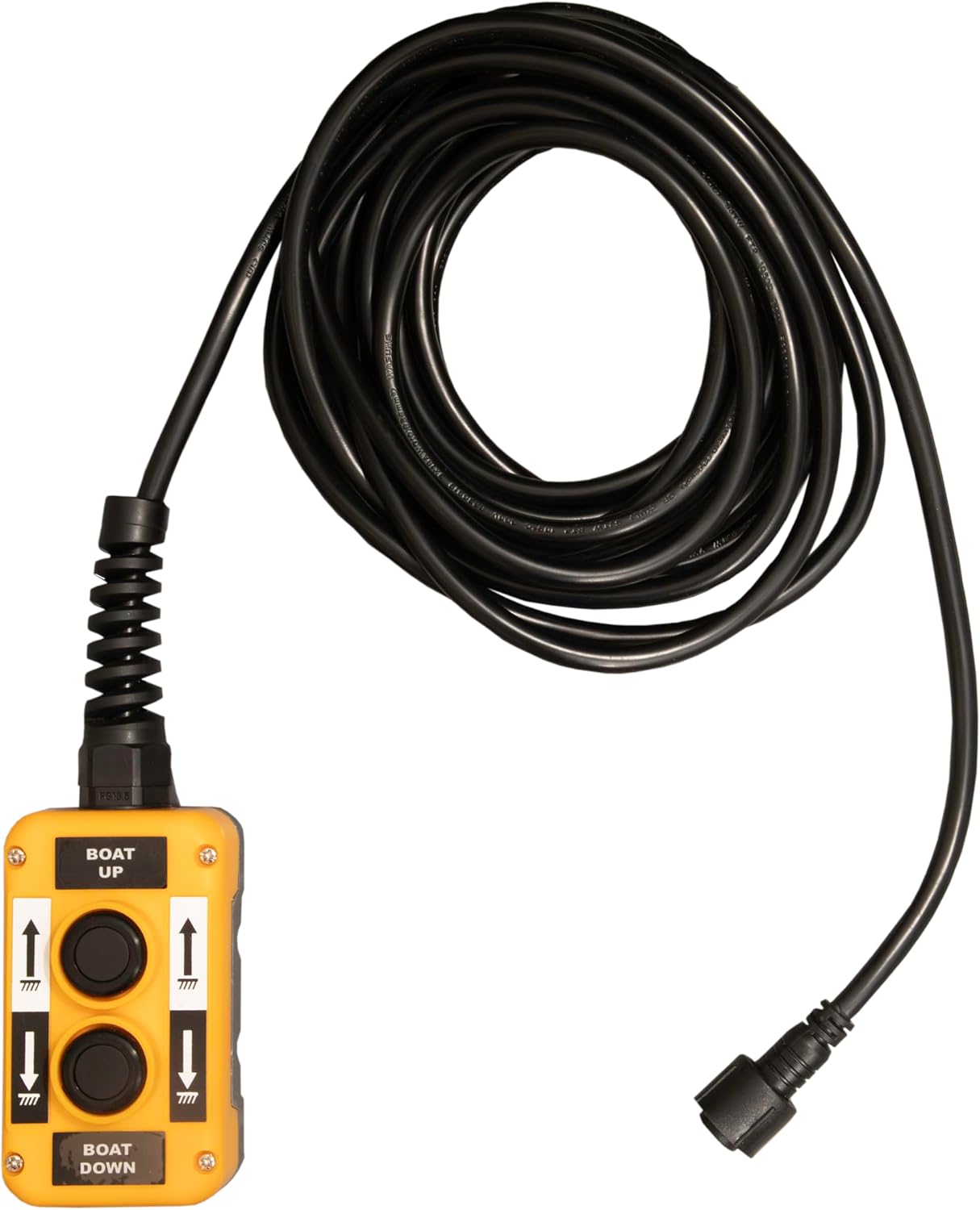
A wired pendant is a weatherproof button box — typically Up, Down, and Stop — connected by a multiconductor cable directly to your lift motor’s control box. This is the lowest-complexity, lowest-cost upgrade path, and for a large share of single-slip freshwater dock owners, it is also the correct one.
The Extreme Max Boss Pendant Switch is the well-reviewed benchmark in this tier. Owners consistently report that installation is intuitive if you’re comfortable identifying wire terminals, and the ergonomics of a handheld button box make single-handed lift operation from the boat’s gunwale genuinely feasible. No radio-frequency components, no receiver to seal against humidity, no batteries to replace in the transmitter. The tradeoff is fixed operational range: you must be within the cable’s physical length of the motor.
The AMS Pendant Switch covers similar ground with one installation caveat that surfaces in owner reviews: the interior of the control box is tight, and wire termination requires patience. One AMS reviewer specifically flags limited interior box space as a real constraint — if your wiring includes conduit or a larger-gauge feed, plan for that ahead of time. This isn’t a dealbreaker, but it’s the kind of detail that separates a 45-minute install from a two-hour one.
When the budget wired tier is the right answer:
- Simple single-slip freshwater setup, always within 15–20 feet of the motor
- Replacing a failed OEM pendant with a like-for-like solution
- Budget is $150 or under — wired pendants reliably land $60–$100 below equivalent wireless systems
- You want minimal electronic components exposed to marine humidity long-term
Extreme
In stock on Amazon
Check price on AmazonH3: Mid-Tier — Wireless RF Remotes for Typical Residential Docks
Wireless RF systems replace the hardwired cable run with a radio-frequency transmitter/receiver pair. The receiver wires into your motor’s control box exactly where a pendant would terminate; the transmitter is the keyfob you keep in your pocket or the boat’s glove box.
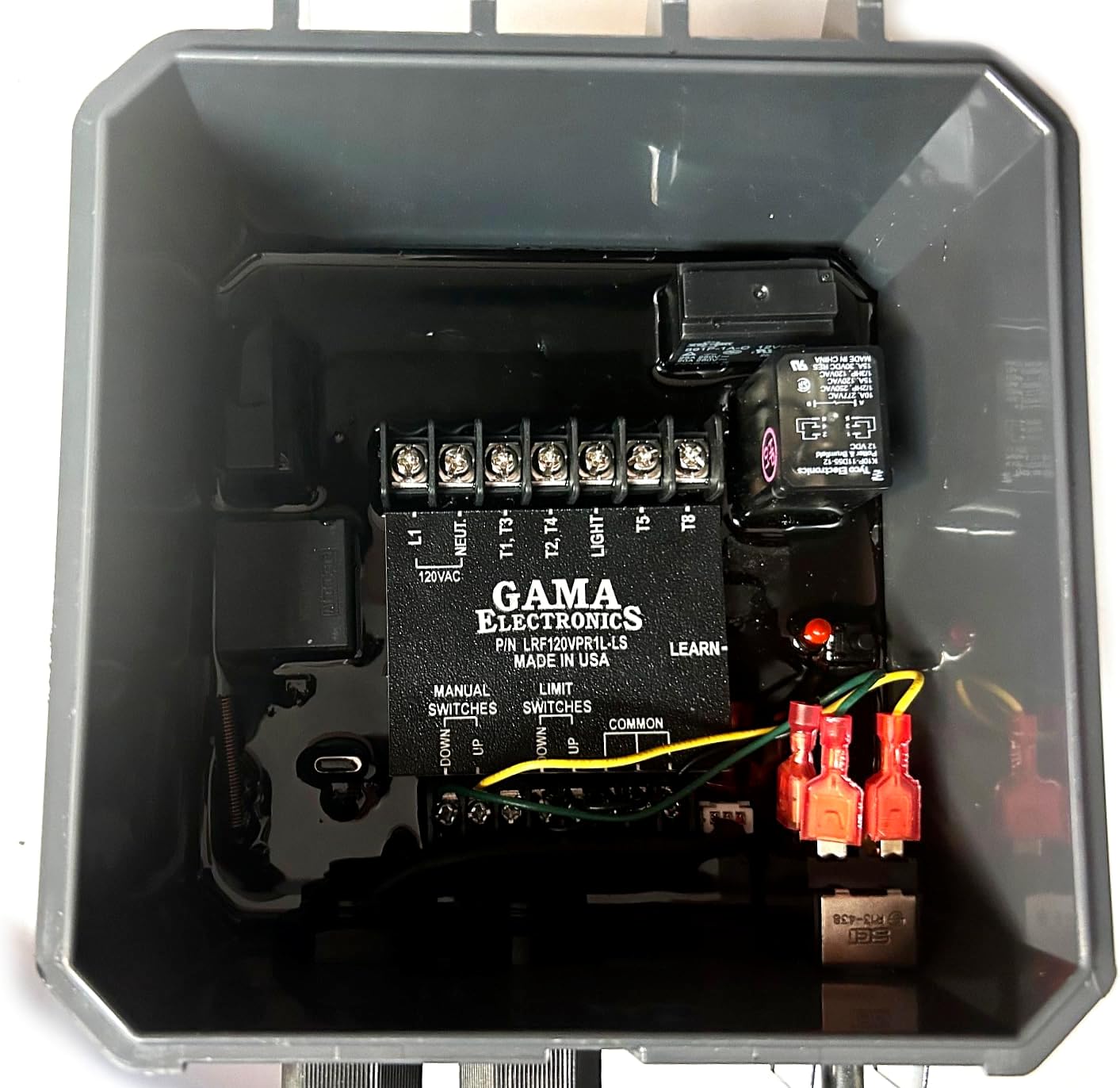
The GAMA RF Wireless Boat Lift Remote Control is the most-reviewed budget-accessible wireless option in this category. The savings narrative — hundreds of dollars versus premium alternatives priced near $650 — is supported by the pricing landscape. More practically, GAMA’s customer support model is a genuine differentiator: multiple owners specifically credit GAMA’s willingness to provide motor-specific wiring diagrams as the difference between a successful install and a returned product. If you’re not certain about your motor’s wiring configuration, that support availability matters more than any single product feature.
The Gem Remotes 7240 Wireless Boat Lift Remote targets the same buyer but emphasizes range. Owner reviews report the unit working reliably from a house to a backyard waterfront dock — contextualizing the 7240 as a solution for setups where the dock isn’t immediately adjacent to an observation point. If your property has a sloped backyard, a deck above the waterline, or a long pier, operating the lift before you’ve even walked down to the dock is a genuine workflow improvement.
When the mid-tier wireless option is the right answer:
- Your dock is mid-pier or your property has elevation change between house and water
- Multiple family members need independent transmitters
- You want to stage the lift’s position before maneuvering the boat into the slip
- Budget is $150–$350
Boating Magazine’s coverage of dock technology has noted that RF-based lift controls are increasingly standard on new floating dock installations, with the receiver’s enclosure rating — not the transmitter’s range — being the specification most often overlooked by first-time buyers.
AMS
$93.99
In stock on Amazon
Check price on AmazonH3: Premium Tier — High-Range and Multi-Slip Wireless Systems
At the premium end, wireless lift control systems extend operational range to 150–300 feet, support multiple slips from a single receiver hub, and typically use fully encapsulated or NEMA-rated enclosures suited for saltwater spray environments. These systems are overkill for a single residential slip on a freshwater lake. They are correctly specified for marina applications, long commercial piers, or property configurations where the motor is not visible from the launch position.
Pricing for premium systems runs $400–$650 and up. The wiring complexity is correspondingly higher — most require a licensed marine electrician for installation, particularly when integrating with 240V three-phase motors uncommon in residential settings.
When the premium tier is the right answer:
- Saltwater or high-spray environment where enclosure IP rating is a primary specification
- Commercial or semi-commercial multi-slip operation
- Motor is not visible from the operating position (long enclosed boathouse)
- Budget supports $400+ and professional installation is planned
Power & Motoryacht has covered marina infrastructure upgrades extensively and consistently identifies control-system enclosure quality — specifically ingress protection ratings for the receiver housing — as the primary differentiator between systems that last five years in saltwater and those that last eighteen months.
Boat
$249.95
In stock on Amazon
Check price on AmazonThe Wiring Compatibility Question Is the Real Gating Factor
Here’s the decision variable that most buyers underestimate until they’re holding a new controller and staring at their motor’s terminal block: motor type determines compatibility, not price point.
The most common boat lift motors are capacitor-start single-phase motors, typically wired with four leads (two run windings and a capacitor leg). Some older or lower-cost lifts use simpler two-wire or three-wire configurations. Replacement controllers — both pendant and RF — are designed around specific wiring topologies. A four-wire capacitor-start controller will not work correctly on a two-wire motor, and vice versa.
Before purchasing any replacement controller, you need:
- The motor’s nameplate data (voltage, phase, HP rating)
- The existing wiring diagram (often taped inside the motor junction box cover)
- Confirmation from the controller manufacturer that their product supports your motor’s configuration
This isn’t hypothetical — the GAMA support-call narrative from owner reviews is a direct illustration of a buyer who navigated this correctly after initial confusion. The cost of skipping this step is a return shipment and a delayed boating season.
Practical Sailor’s marine electrical systems coverage — spanning multiple issues of both the print and online editions — consistently emphasizes that motor identification should precede any control-system purchasing decision. This guidance applies as much to lift controls as to bilge pump switches or windlass remotes: know the motor before you specify the controller.
If X, Then Y: The Decision Framework
If your lift is a simple single-slip freshwater setup, budget is under $150, and you’re within 20 feet of the motor when launching: Get a quality wired pendant. The Extreme Max Boss is the well-reviewed benchmark. Immediate operational improvement, straightforward install, no RF components to maintain.
If your dock is mid-pier, you have a sloped property, or multiple family members need independent operation: Go wireless RF. The Gem Remotes 7240 is the range-focused option with real-world validation from off-dock distances. The GAMA RF remote is the budget-forward option with strong support infrastructure for buyers uncertain about their motor wiring.
If you’re unsure about your motor’s wiring type: Contact the controller manufacturer’s technical support before purchasing anything. Photograph the motor nameplate and the terminal block. This is not overcautious — it’s how experienced installers approach every unfamiliar motor.
If you’re in a saltwater or high-spray environment: Prioritize enclosure IP rating over price tier. A less expensive RF receiver with a marginal enclosure will cost more in replacement cycles than a better-sealed unit costs upfront.
If budget is $150 or under: Wired pendant. The wireless RF systems worth owning in marine environments reliably start above that threshold.
Frequently Asked Questions
How do I know if my boat lift motor is compatible with an RF remote system? Check the motor nameplate for phase (single-phase is most common in residential lifts), voltage (120V or 240V), and wiring configuration. Most RF remote systems on the market are designed for single-phase capacitor-start motors wired with four leads. If you have a two-wire or three-wire motor, compatibility narrows significantly. Photograph the nameplate and terminal block and contact the RF remote manufacturer directly before purchasing.
Can I operate a wireless RF controller from inside my boat without docking first? Yes — that’s one of the primary use cases. Owner reviews for the GAMA RF remote describe operating from the water, positioning the lift cradle before the boat reaches the slip. Range varies with environment, but reported real-world performance is typically 50–100 feet in open-air dock settings.
How far from the dock will the Gem Remotes 7240 transmitter reliably work? Based on published owner reports, the 7240 demonstrates reliable operation at distances sufficient to cover a house-to-backyard-waterfront-dock run — roughly 75–150 feet in typical residential property configurations. Performance degrades through solid structures, so line-of-sight distance is the relevant metric.
What is the difference between a wired pendant switch and a wireless RF system? A wired pendant is a handheld button box connected to the motor by a physical cable. Operation requires you to be within the cable’s length of the motor. An RF system uses a radio-frequency transmitter and receiver pair — no cable run, operable from any distance within the transmitter’s range. Pendants are simpler to install and lower cost; RF systems provide operational flexibility at higher installation complexity.
Do these controllers work with both single-phase and capacitor-start motors? Single-phase and capacitor-start are related but not identical specifications. Most residential boat lift motors are single-phase and capacitor-start — the capacitor is part of the starting circuit. Controllers designed for capacitor-start single-phase motors are the most common type in this product category. Three-phase motors, uncommon in residential settings, require entirely different control systems.
What should I do if the replacement controller wiring doesn’t match my existing lift wiring? Stop before improvising. Contact the controller manufacturer’s technical support — GAMA specifically receives owner praise for providing motor-specific wiring diagrams on request. If the manufacturer cannot reconcile the wiring difference, consult the lift manufacturer’s documentation or hire a licensed marine electrician. Miswired lift motors can damage the motor, the controller, or both — and can create electrical safety hazards at the waterline.