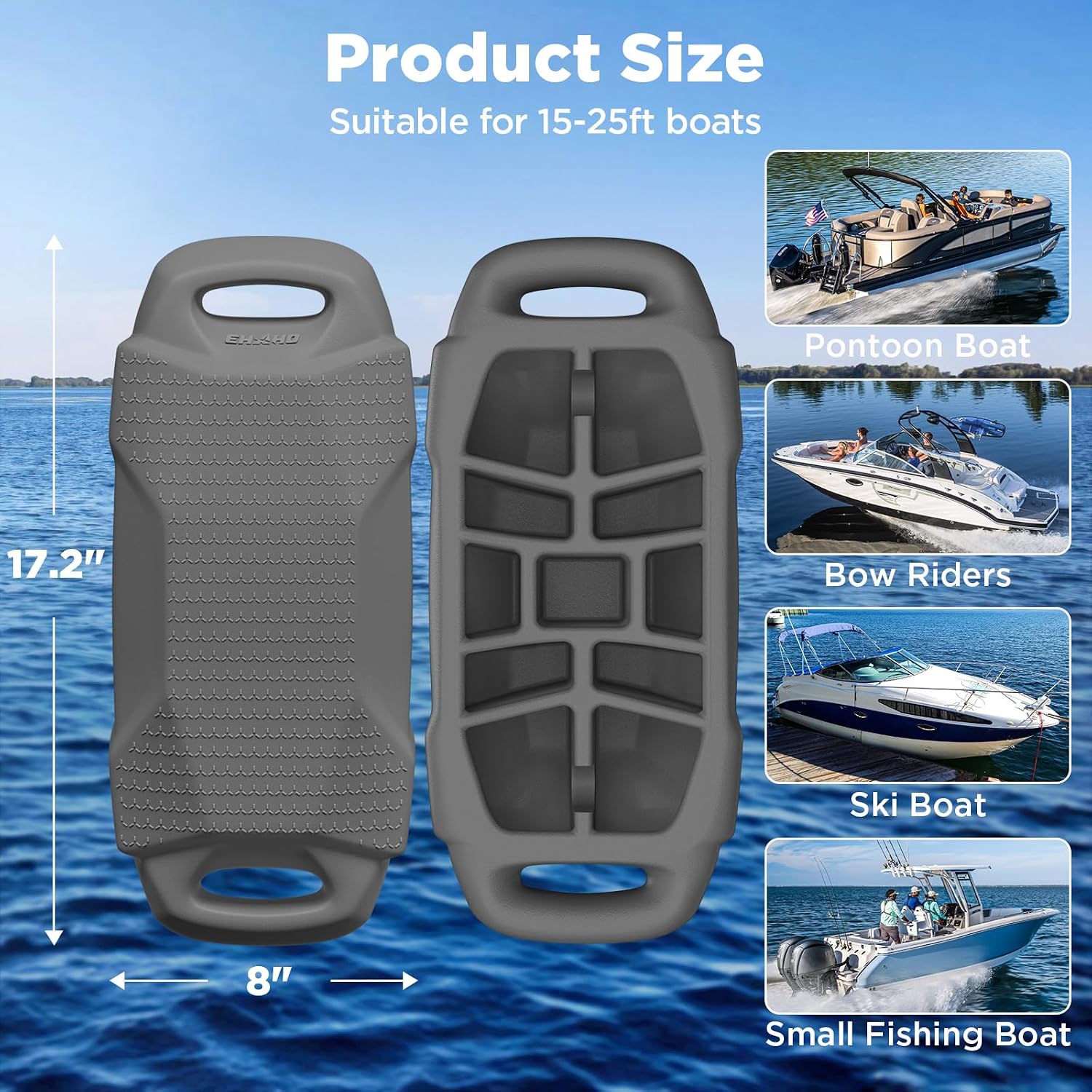
A boat fender — sometimes called a bumper — is simply a cushion you hang between your boat and something hard: a dock face, a piling, a neighbor’s hull. It absorbs the slow, grinding contact that happens every time wind or wake pushes your boat against a fixed surface. Without them, gel coat gets scuffed, rub rails get cracked, and dock edges get gouged. They’re unglamorous gear, but anyone who’s come back to a damaged hull after a night of unexpected chop has learned to take them seriously. Today there are two fundamentally different technologies competing for space in your dock box: EVA foam fenders — closed-cell foam blocks or cylinders that cannot puncture — and inflatable bumpers, which use pressurized air inside a vinyl or PVC shell and can be deflated for storage. Each type has a use case it dominates and a use case where it underperforms. This article walks through the tradeoffs so you can match the right fender to your dock geometry, boat type, and maintenance tolerance.
The Core Mechanical Difference (and Why It Actually Matters)
This isn’t just a “foam vs. air” aesthetic preference. The structural behavior of the two materials produces genuinely different real-world outcomes.
EVA foam (ethylene-vinyl acetate — the same closed-cell foam used in premium marine buoys and high-end athletic footwear midsoles) deforms under compression and springs back. It cannot be punctured, doesn’t require inflation, and its protection level doesn’t degrade over time from slow leaks or valve micro-seepage. The result is a fender that delivers consistent protection from the moment you hang it to the moment you take it down, with no intermediate attention required.
Inflatable bumpers work on a different principle: a pressurized air column or chamber distributes impact load across a larger contact area. The advantage is tunable firmness — you can add or release air to match conditions — and, critically, form factor. Inflatable tubes can be very long, which lets them bridge irregular gaps along a rough concrete marina wall or span the contact zone between two boats rafted together. That spanning capability is the primary reason long inflatable tubes exist as a product category, and it’s a geometry that foam blocks simply cannot replicate.
According to Practical Sailor’s “Dock Fender Roundup: Materials and Longevity,” the most common buyer error is selecting fender type based on price rather than geometry-to-application match. The mismatch almost always produces the same outcome: the fender rides out of position or fails to cover the actual contact zone. Geometry first, price second.
Head-to-Head: Three Scenarios Where the Right Choice Is Clear
H3: Fixed Dock Posts and Overnight Docking in Wake-Prone Areas
If your primary concern is a fender that stays exactly where you put it through wind, wake, and overnight chop — without you checking on it — EVA foam is the stronger choice for fixed-position applications.
The most common failure mode of hung fenders is vertical migration: in moderate-to-heavy wake conditions, a standard rope-hung fender rides up or down the hull as wave action changes the load angle. EVA foam fenders with integrated locking rope systems address this directly. The foam body is dense enough that it doesn’t bounce erratically in chop the way a fully pressurized cylinder can, and a properly secured locking rope prevents the upward creep that leaves the hull unprotected.
For dock-post mounting specifically — securing a fender directly to a wood or aluminum piling rather than hanging it from the boat — EVA foam has a practical construction advantage. The material won’t develop a pressure-induced flat spot from being pinched against a piling for days at a time, and it won’t slowly deflate to zero protection after a week of sun-heated expansion and nighttime contraction cycles.
Owners across multiple inflatable fender product lines report needing to check and top off pressure every two to five days in warm weather. Thermal expansion during the day releases pressure through valve micro-seepage; overnight cooling drops pressure further. EVA foam requires zero pressure maintenance — inspection is visual only. For boaters who spend limited time at the dock and cannot monitor equipment daily, that maintenance difference is material.
Dock
$42.99
In stock on Amazon
Check price on AmazonH3: Pontoon Boats and Large Flat-Hull Surfaces
Inflatable bumpers — specifically flat-profile inflatable panels — dominate one application that foam cylinders handle poorly: protecting pontoon boat rub rails.
Pontoon hulls are low-profile, the deck extends well past the pontoon tubes, and the rub rail (the protective strip running along the outer edge of the deck) sits at an unusual height relative to a standard round fender. Boating Magazine’s boat-handling feature “How to Fender Your Boat the Right Way” notes that round fenders tend to either ride below the pontoon rub rail — leaving the rail exposed to dock contact — or get pinched above it at an angle that reduces effective coverage. The round cylinder contacts the pontoon tube below the deck edge and misses the rub rail entirely in many docking situations.
Flat-profile inflatable fenders solve this by pressing uniformly against a large, flat surface rather than making a narrow cylindrical contact. The wide footprint conforms to the full surface area of the deck edge, protecting both the rub rail and the deck face simultaneously. For pontoon owners, this geometry match is not optional — it’s the difference between a fender that works and one that simply looks like it’s working.
Power & Motoryacht’s “Pontoon and Tritoon Docking Gear Guide” recommends flat or wide-profile bumpers for any flat-decked vessel, noting that the contact geometry of a round fender against a flat deck edge concentrates load in a narrow band rather than distributing it across the full contact zone.
 product image](/images/external/b4f0324e70bf.jpg)
AWEMUFA
$129.99
In stock on Amazon
Check price on AmazonH3: Rafting, Irregular Marina Walls, and Full-Span Gap Coverage
Long inflatable tube fenders dominate a third scenario: any situation where you need a single fender to span a long horizontal contact zone.
Rafting scenarios — tying your boat alongside another boat, or holding position against a rough marina wall for an extended period — require fenders that can bridge irregular gaps and distribute load over a long run. A single long inflatable tube can run along the full beam contact zone between two rafted boats, something you cannot practically achieve with individual hanging fenders or foam blocks of standard size. The tube geometry also allows some degree of conformity to irregular concrete or rock faces that a rigid foam block would bridge rather than contact.
The honest caveat for long-term inflatable deployment: after extended UV and weather exposure, PVC-based inflatable material stiffens and loses some conformability. BoatTest.com’s editorial overview “Dock Hardware Buyer Considerations” characterizes this stiffening behavior as a material-category reality for PVC marine inflatables broadly — not a defect unique to any single product — and notes that full-sun saltwater environments typically accelerate this timeline to the three-to-five-year range. Budget for replacement at that interval and the category performs as expected.
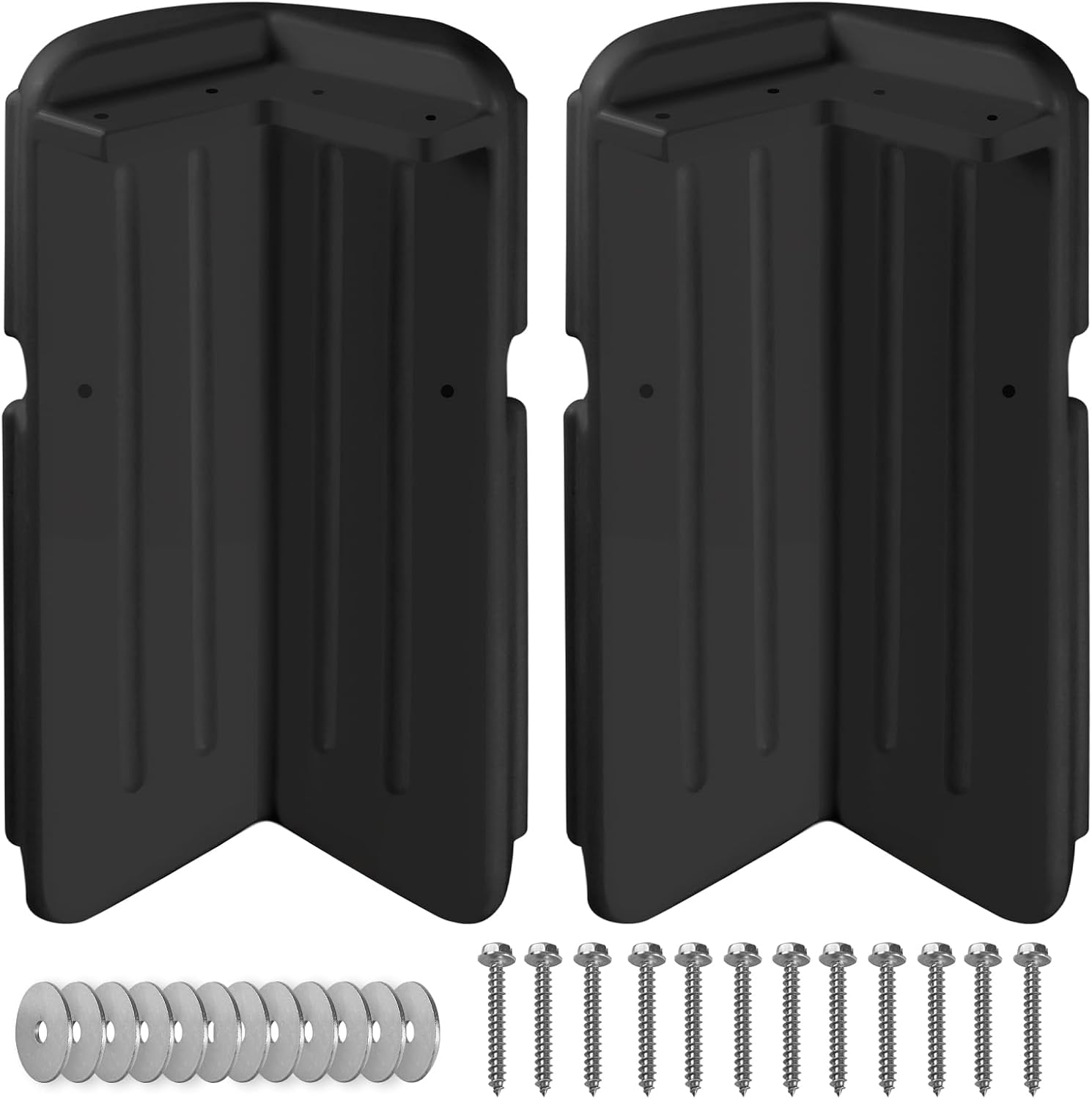
Corner inflatable bumpers occupy a related niche: protecting the vulnerable 90-degree corners of docks or slips where two dock faces meet. The key installation detail is fender washers, which distribute the mounting bolt load and prevent the bracket from pulling through the inflatable shell over time. Several corner bumper product lines include washers in the package; verify before purchasing that washers are included, particularly if the dock framing is composite or aluminum rather than wood, where standard wood-screw dimensions don’t apply.

Extreme
$875.00
In stock on Amazon
Check price on AmazonFull Dock Edge vs. Individual Hanging Fenders: A System-Level Decision
This question comes up often for property owners building or renovating a full dock, and it deserves its own treatment because the economics and logistics differ from outfitting a single boat.
Individual hanging fenders — the round or cylindrical style tied to cleats — are easy to reposition and work well for visitors arriving in different boats, but they require active management. They drift, they bunch up, and they protect only the specific spots where you’ve hung them. If a guest boat is two feet longer than your usual vessel, those fenders may not be covering the right contact zones.
Full dock-face bumper systems — wide flat panels or continuous edge bumpers running the full length of a dock face — provide consistent coverage regardless of where a boat lands. Power & Motoryacht’s “Pontoon and Tritoon Docking Gear Guide” notes that dock-face coverage is increasingly specified on residential docks where multiple family boats or frequent guest boats use the same slip, because it eliminates the positioning guesswork. The tradeoff is installation commitment: dock-face systems are bolted in place, require drilling into the dock structure, and need to be removed for dock maintenance or replacement.
For most private residential docks, a hybrid approach works well: a permanent foam bumper strip along the main dock face, plus one or two individual hanging fenders on rope for positioning flexibility when beam-on docking in tricky wind conditions.
Frequently Asked Questions
Why do round inflatable fenders not work well on pontoon boats? Round fenders are designed to contact a smooth, vertical hull surface — a V-hull or a flat fiberglass side. Pontoon boat geometry puts the rub rail at a height that round fenders either miss entirely or contact at a poor angle. The cylinder contacts the pontoon tube below the deck edge and leaves the rub rail exposed. Flat-profile fenders solve this by conforming to the full deck edge surface rather than making a single-line contact.
Will EVA foam fenders leave black marks or scuff marks on a fiberglass hull? This depends on the foam’s surface finish and color. White or light-gray EVA foam fenders from reputable manufacturers are formulated to be non-marking. Dark-colored foam and lower-grade foam compounds can leave residue, particularly in high-friction situations. Check manufacturer specifications for a “non-marking” designation before mounting any foam product against a finished fiberglass surface.
Can I use the same fender mounted to dock posts and hung from the boat? EVA foam fenders with integrated locking ropes handle both applications well. The structural rigidity holds up to fixed-mount use without developing flat spots. Standard round inflatable fenders are designed primarily for hanging from the boat and don’t lend themselves to fixed dock-post mounting, because the pressurized shell can develop deformation zones when compressed against a hard surface for extended periods.
How long do inflatable fenders hold air when left deployed for multiple days? Owners across multiple inflatable fender product lines report needing to check and top off pressure every two to five days in warm weather. Thermal expansion during the day releases pressure through valve micro-seepage; overnight cooling drops pressure further. In cool, stable conditions, a well-made inflatable fender can hold adequate pressure for a week or more. In midsummer heat with significant day/night temperature swings — common on inland lakes — plan for more frequent checks. This is category-wide behavior, not a defect in any specific product.
How do flat dock-face bumpers compare to individual hanging fenders for a full dock edge? Flat dock-face bumpers provide continuous, passive coverage along the full dock edge without requiring active positioning. Individual hanging fenders cover only their specific locations and require adjustment when boats of different sizes use the slip. For a permanent single-boat slip, dock-face coverage is lower-maintenance. For a guest slip or shared dock, individual fenders give more flexibility to match coverage to whatever vessel is present.
The Decision Rule
The two fender categories don’t actually compete head-to-head — they serve different geometries. If you’re choosing fenders for a fixed residential dock where you want a hang-once, forget-it solution that stays in position through wake and weather, EVA foam is your default. If you’re outfitting a pontoon boat, dealing with a rough or irregular dock face that needs full-span coverage, or planning to raft alongside other boats, choose an inflatable format matched to the geometry: flat panels for pontoon rub rails, long tubes for spanning gaps between rafted hulls, corner inflatables for 90-degree dock junctions. Match the form factor to the contact zone, verify non-marking certification for anything touching finished gel coat, and budget for inflatable replacement at the three-to-five-year mark in full-sun environments. Do those three things and either technology will deliver years of reliable hull protection.